



RV & Boat Mobile Satellite Internet
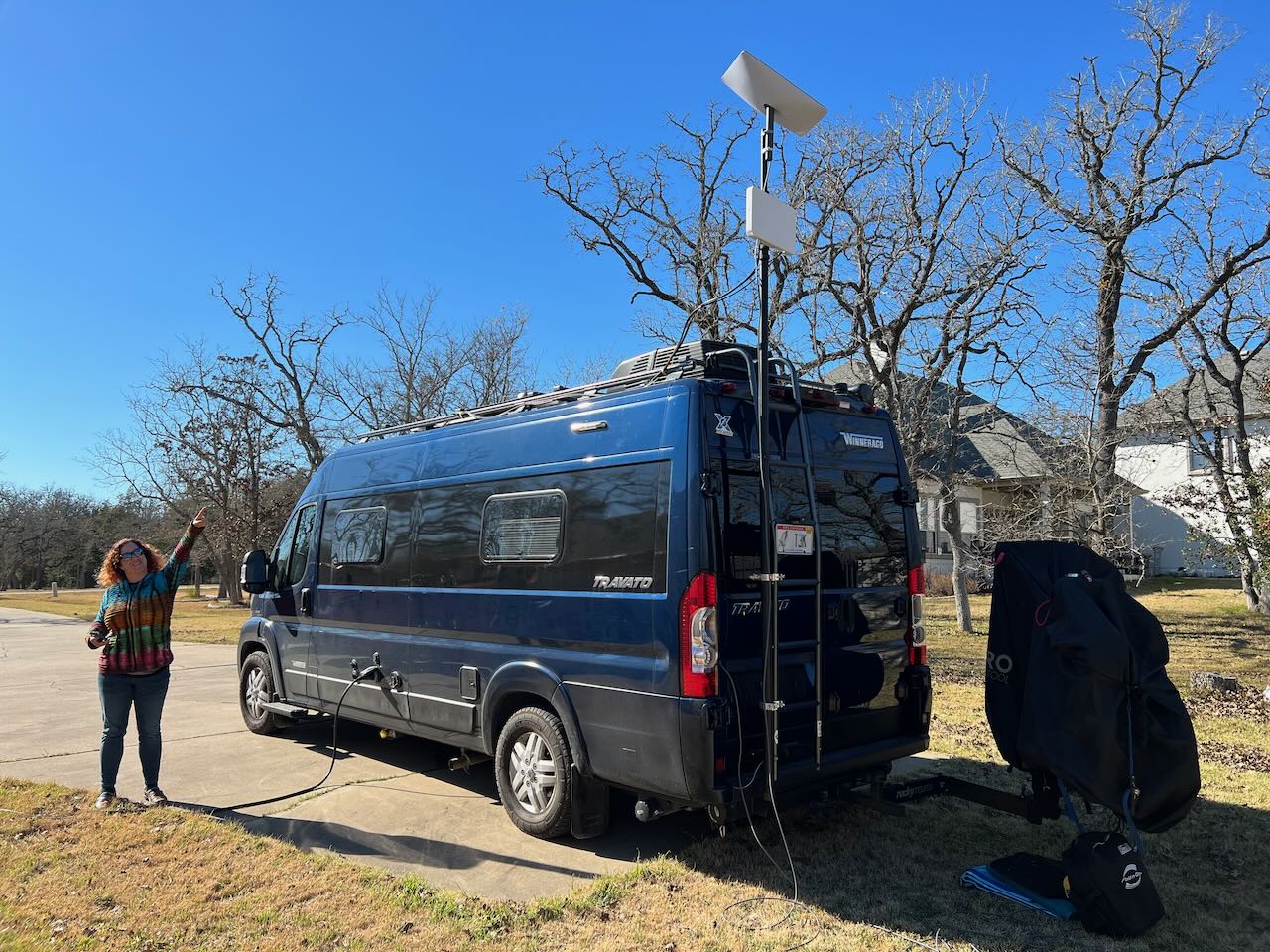
Satellite internet has come a long way - offering high-speed internet access in many places you can travel by RV or boat—when you have a clear view of the sky.
There is something magical and futuristic about being online and connected in the absolute middle of nowhere while parked in your RV or anchored on your boat. The places far beyond Wi-Fi or cellular coverage, where only a satellite far above can provide internet.
For many years, traditional old-school geostationary satellite internet options were available but came with many tradeoffs for RV and boat use—they were slow, expensive, and had much higher latency than cellular alternatives.
But an entirely new generation of satellite internet service has changed the game for RVs and boats - with companies like SpaceX offering low Earth orbit (LEO) satellite constellations that can deliver high-speed, lower-latency connectivity across much of the globe.
These options are rapidly evolving and are useful for providing internet for nomads working, living, or traveling in vans, boats or RVs.
This is an exciting industry to watch, and what we see already today was just a pipe dream a short few years ago, yet there is so much more to come!
Read on to find out more about what is available today and what is potentially coming tomorrow.
RV Mobile Satellite Options Update Article (2026)
Summer 2026 Satellite Mobile Internet Update
If you're a member, please log in above to see your exclusive content.
Don't need a membership? Other ways you can support our work here:
-
As seen in our videos!
-
Get a FREE Month of Starlink!
And our team will get one too!
-
Get a FREE Month of T-Mobile Unlimited Data
Join the Calyx Institute, and get a bonus month - and we do too!
-
Save $20 on Visible
Verizon's prepaid phone plan, we also get a $20 credit.
-
Share About Us!
Link to our content, tell others about MIRC. It's Free!
-
Shop at MobileMustHave
Our members save 10%!
It is with huge gratitude to our members for making the free unbiased educational content on our site possible.
Our members get exclusive access to our in-depth content, classrooms, vendor discounts (that can save you more than membership!), alerts, insider info and interactive guidance. They can even book private advising sessions.
If mobile internet is an important part of your lifestyle, consider helping make MIRC possible by joining or supporting our mission.
The Low Earth Orbit (LEO) Satellite Revolution
Traditional RV and boat satellite internet options have relied on geostationary communication satellites that orbit over the equator. Since the satellites are moving at the same speed that the Earth is rotating, they appear from the ground to be in fixed locations in the sky - sitting 22,236 miles above a set spot on the equator.
Being in a fixed location makes these satellites easy to target with a precisely aimed dish, but there are significant downsides to communicating over such vast distances.
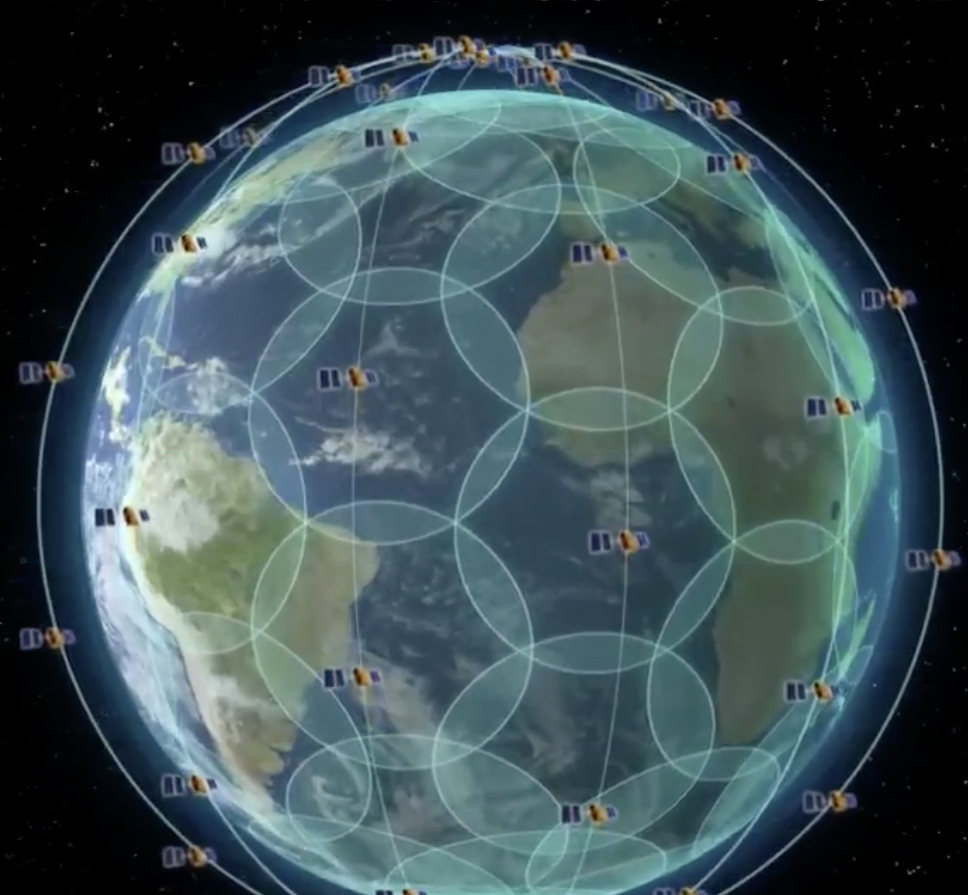
Newer generations of satellite internet options like Starlink instead rely on constellations of many satellites working together in much lower orbits - generally orbiting a few hundred to about 1,200 miles overhead.
The advantage of having satellites in lower orbits is that they are physically close enough to users on the ground to provide fast, low-latency communications rivaling cellular.
But the disadvantage of a lower orbit satellite system is that the satellites are constantly moving in the sky, and it takes many satellites in coordinated orbits to ensure that at least one is always overhead at any given time.
This means that you can't roll out service with just a few satellites; you need to get enough satellites in orbit to provide uninterrupted coverage over your target areas - potentially thousands of satellites.
SpaceX's Starlink jumped into an early lead in this race and has dominated the market so far, but there are other players too - and the next several years are going to be extremely exciting as these new networks (literally) get off the ground.
We track all of these developments and report on major milestones and announcements.
If you're considering a satellite internet option for your RV or boat travels, it is worth staying updated on the latest details of these upcoming options.
Here's all of our most recent satellite internet news coverage:
In addition to these news stories, we are doing our best to keep the below content updated for all of the major players, too.
RV & Boat Satellite Internet Realities
 With all satellite systems, one challenge is unavoidable - to stay connected, you will always require a clear view of the sky.
Satellite internet requires a clear line of sight between your receiver and the satellite to work - meaning you might not be able to get connected while your RV is parked under a shady tree, next to a tall building, or in a canyon.
With geosynchronous satellites, you might be able to aim between a gap in the trees at the fixed target. But since LEO satellites are in motion overhead, any obstructions nearby might result in dropouts as the satellite passes behind branches, buildings, or boulders.
Because of these constraints, LEO satellite constellations are NOT going to be a universal magical replacement for RV internet service any time soon.

And it is not just about where you can get connected; satellites experience congestion in areas with too many customers, just like cellular.
In more populated areas, there likely will never be enough satellite bandwidth to go around compared to what cellular and wired services like fiber and cable can provide.
In an urban or suburban area, a satellite will likely never be able to fully compete with a built-out cellular infrastructure on the ground.
On the other hand, in many remote areas, it will never make sense to build a network of cell towers, and no matter how much cellular companies expand, there will ALWAYS be gaps in coverage.
The future is bright with these satellite internet options for RV and boat travels, and satellite has now become an integral part of a mobile internet arsenal. Enabling low-latency broadband in many places where it was completely unavailable before.
However, most RV and boat nomads will not be able to rely solely on satellite internet. For many RVers and cruisers, a mix of cellular, Wi-Fi, and satellite will remain the key to staying connected everywhere.
The ideal connectivity future involves a mix of satellite and cellular, with service roaming seamlessly to the best connection possible wherever you happen to be.
Getting Internet From Space - Basics
Satellite internet can be confusing. It is important to make sure that you understand the basics.
Satellite TV and Satellite Internet Are Not the Same!
 Receiving a signal from space isn't particularly hard.
Transmitting a signal back to a satellite, on the other hand, is where it gets tricky.
Satellite TV dishes are receive-only devices and have no capability to transmit. Internet usage, however, requires two-way communication – and thus much larger and more complicated gear both on the ground and in space.
Some people get confused because they see satellite TV providers Dish Network and DirecTV sometimes advertising bundled packages that include internet service – but this is usually not satellite-provided internet.
These bundled plans are intended for stationary satellite TV consumers to combine their TV, wired internet, and phone bills into one. The satellite TV provider contracts out to local phone or even partner cable companies to provide the actual internet service – usually relying on a hard-wired internet connection.
Customers in rural areas beyond the reach of a wired partner may instead get partnered with a residential stationary-focused satellite internet option - usually ViaSat or Hughes, with an entirely separate dish setup than is used for TV reception.
In other words – not mobile friendly at all.
NOTE: Though the dishes look similar, most satellite internet systems are strictly for internet service, and are NOT compatible with any satellite TV services. If you also want satellite TV to go along with satellite internet, you'll actually need a second dish!
Residential Satellite Service Generally Is NOT Mobile Friendly
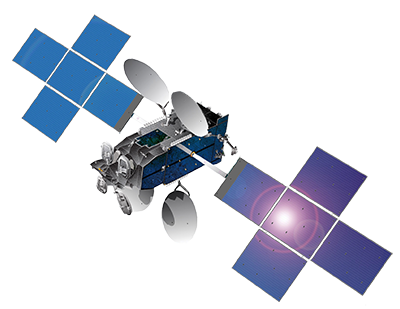
Traditional geostationary satellite internet has historically been dominated by HughesNet and Viasat, after most other consumer providers either disappeared or were acquired. But both have struggled to compete with newer LEO services like Starlink.
Hughes’ parent company filed for Chapter 11 bankruptcy protection in 2026 and is increasingly focusing on enterprise, government, and defense markets rather than consumer broadband. Viasat has also seen its U.S. residential satellite business shrink dramatically, from roughly 603,000 subscribers to about 115,000, while increasingly focusing on enterprise, government, aviation, and other specialized markets.
Many smaller or regional geostationary satellite internet offerings have historically relied on HughesNet or Viasat infrastructure behind the scenes.
Traditional residential HughesNet and Viasat service is not designed for mobility. Moving locations usually requires professional installation, and may also require new equipment or a plan change.
Even if you had the tools to move and aim their gear at a new location, the network will detect you have moved and will not allow you to connect without an installer signing off that things are set up properly.
While you can usually get a dish permanently mounted at your summer and winter bases, and then just move the modem in between - we don't consider either of these as viable connectivity options for users who move more than once or twice a year.
There are mobile satellite internet solutions out there presently suitable for mobile RVers, discussed later in this guide.
Starlink for Mobile RV & Boat Use
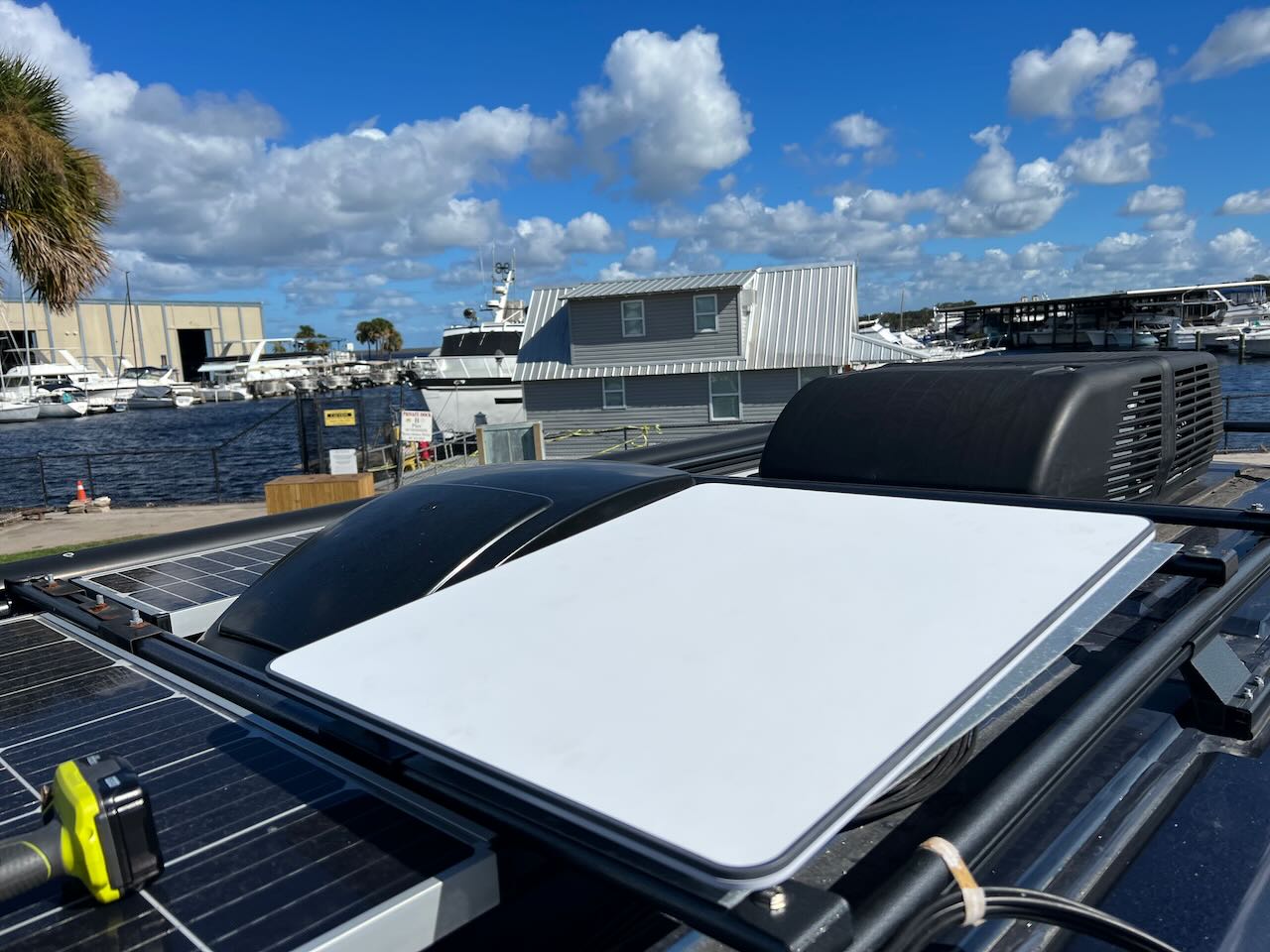
Starlink offers several service plan options for fixed, roaming, maritime, and higher-priority use, with different restrictions for portability, international travel, in-motion use, ocean coverage, and data priority.
Starlink changes these plans and their terms frequently, so rather than trying to duplicate all of the current options here, we maintain the details in our dedicated Starlink guide below.
SpaceX has partnered with outside companies such as Winegard, Best Buy, Home Depot, Walmart, and Peplink to sell Starlink to consumers.
Because Starlink is such a hot topic, we have published a guide devoted to the topic:
- Starlink Satellite Internet For Mobile RV And Boat Use - Our featured guide focused on taking advantage of SpaceX's Starlink on the go.
Member Exclusive Content Below
Member Exclusive Content In This Guide
Has this guide been helpful so far?
Well.. there's a lot more below available to our members. As well as dozens of other guides like this, videos, classrooms, forums, webinars and more. All specifically created for helping keep RVers, cruisers and nomads online.

Consider Becoming a Member
If mobile internet is an important part of your lifestyle, a membership can help keep you connected with these exclusive benefits:
- in-depth exclusive content
- interactive guidance
- vendor discounts
- alerts & insider tips
- classroom
- community
Free Content Like This Made Possible By Our Members!
We are community funded via our premium membership program - allowing us to focus on creating unbiased quality, in-depth, constantly updated content. We don't accept 3rd party advertising, we're not sponsored and we don't sell 'stuff'.
Already a member?
Log in to continue with this guide.
Check out the Topics Covered in the Member Section:
Geostationary Satellite Fundamentals
Learn how traditional geostationary satellite systems work, including spot beams, coverage maps, equipment requirements, and the latency that comes from communicating with satellites more than 22,000 miles above the Earth.
Current Geostationary Satellite Options
We look at current and legacy options from HughesNet, Viasat, and specialized mobile satellite providers—and why these systems now have a limited role for most RVers and boaters.
The Ongoing LEO Revolution
Low Earth orbit satellite systems have changed what is possible for mobile satellite internet. This section explains the advantages, limitations, and infrastructure required to make these networks work.
LEO Satellite Internet Players
We take a closer look at Starlink, Amazon Leo, Eutelsat OneWeb, Iridium, and other companies developing or operating low Earth orbit satellite networks.
Cellular From Space
Starlink, AST SpaceMobile, Elveo Mobile, and other providers are working to connect ordinary cellular phones directly to satellites when terrestrial coverage is unavailable.
Communicators & Low Bandwidth Satellite Options
We cover dedicated satellite communicators such as Garmin inReach and SPOT, satellite connectivity built into compatible phones, and the tradeoffs between these options.
Satellite Internet - A Bright Future Ahead!
Satellite internet has changed dramatically in just a few years, and there is still a lot more development ahead.
Starlink has become the dominant consumer LEO broadband service, providing fixed and mobile connectivity across much of the world. Its next-generation V3 constellation promises substantially more capacity.
Amazon Leo is now actively deploying its competing LEO constellation, although launch constraints continue to make the timing of widespread commercial availability uncertain.
Other satellite networks such as Eutelsat OneWeb and Iridium continue to play important roles, particularly in enterprise, aviation, government, and specialized communications markets.
Direct-to-Cell networks are also extending basic connectivity directly to smartphones, further blurring the line between satellite and cellular.
For RVers and boaters, the biggest change is that satellite internet is no longer just a last-resort connection for places beyond cellular coverage. It has become an important part of a mobile internet setup.
But satellite still has limitations, including obstructions, congestion, and the need for a clear view of the sky. Cellular, Wi-Fi, and satellite each have strengths in different situations.
For most nomads, the best connectivity strategy will continue to involve combining these options rather than expecting any one technology to work everywhere.
Satellite Internet Options Product Guide
Here are all the satellite options we are tracking in the product center - ranging from full-on mobile solutions to very basic on-the-go options.
RV Note: For most RVers looking for satellite broadband today, Starlink is the clear mainstream option. Traditional geostationary systems such as HughesNet Gen5 and RVDataSat are now primarily legacy or specialized solutions and generally aren't something we would recommend for a new mobile internet setup.
Marine Note: Starlink has dramatically changed satellite internet for boaters, providing high-speed service with officially supported in-motion and ocean-use options. Traditional geostationary marine broadband systems still exist, particularly for commercial and high-end vessels, but they generally require expensive stabilized equipment. Satellite communicators and direct-to-device services can also provide useful backup connectivity when broadband isn't needed.
Click on each option in the grid for more details:











Additional Reading
Related Guides
- Starlink Satellite Internet For Mobile RV And Boat Use - Our featured guide focused on taking advantage of SpaceX's Starlink on the go.
- Direct-to-Cell (DTC) Satellite Connectivity for RVers and Travelers - Our guide to phone-based satellite connectivity, including current services, compatible phones, and provider options.
- Assessing Your Mobile Internet Needs
- Travel Planning Around Connectivity for RVers and Cruisers
- Thinking Outside the Box - Alternatives to Traditional Mobile Internet Options
- Testing & Understanding Your Mobile Internet Speeds
Related Articles
Explore the Resource Center
Have Questions?
Join our 'Library Desk':
Internet for RVers & Cruisers Facebook Group
We cross post news articles and guides, and can help point you in the right direction to our content here on the resource center.
It is with gratitude to our premium members that we're able to offer our free content - and for that, they also have access to our member Q&A areas for more in-depth guidance.
Become a Member
 The MIA is our premium membership - designed for those who consider mobile internet an important part of their lifestyle.
In thanks for making content like this possible, we offer a bunch of additional perks. From interactive guidance, in-depth member exclusive content, discounts, alerts, classroom and ability to book private advising sessions.
Stay In the Know
We're constantly tracking the industry and analyzing new developments for mobile travelers. If you'd like to receive updates, we offer several ways:
- Subscribe to our free monthly newsletter
- Subscribe to our News Stories RSS Feed
- Subscribe to our YouTube Channel
- Follow our Facebook Page







 Mobile Internet Resource Center was founded by Chris & Cherie of