
Key Points:
- During its August 4th earnings call, SpaceX revealed aspirations to go head-to-head with the big three carriers with a plan to launch "Starlink Mobile" direct to consumer cellular service with a mix of satellite and terrestrial coverage.
- SpaceX's Starship and Starlink V3 development program had a very successful test flight - deploying 20 Starlink V3 satellites towards fiery doom, but paving the way for future operational orbital missions.
- Having lost so many customers to SpaceX, legacy geostationary satellite internet pioneer HughesNet has officially filed for Chapter 11 bankruptcy, and ViaSat is pulling back from consumer aspirations.
- AST SpaceMobile has confirmed that the Blue Origin New Glenn explosion will delay its direct-to-cell broadband service rollout until sometime in 2027, but SpaceMobile still hopes to have enough satellites for limited beta service before the end of this year. Blue Origin is still claiming to be on track to return New Glenn to flight by the end of 2026 - but the explosion is certainly impacting Amazon Leo's rollout as well.
Things are getting even wilder in the satellite internet world - and a lot has changed since our previous industry update just two months ago.
The biggest news - SpaceX now looks like it intends to take on the big three cellular providers by launching its own consumer-direct Starlink Mobile cellular service!
Up until now SpaceX had been offering Direct-to-Cell service working in partnership with terrestrial cellular providers around the world - with Starlink being used to fill in the coverage gaps and eliminate dead zones in their partner networks.
In the USA, this partnership has been with T-Mobile.
But now SpaceX looks like it may be willing to burn its partner relationships to the ground - and it is instead ramping up to go it alone with its own direct consumer cellular offering.
But does SpaceX really have what it takes to become a new nationwide (or global!?) cellular carrier - starting from scratch with no terrestrial towers and limited spectrum assets?
Or is the threat of direct competition a negotiating tactic intended to push the big carriers to partner with SpaceX on more favorable terms?
After having seen what SpaceX has done to its satellite industry competitors over the past few years, should the cellular industry be worried?
We've got the latest details, and an update on the rest of the players...
Table of Contents
Video Story
Starlink Mobile - A Hybrid Satellite And Ground Cellular Network
During the SpaceX earnings call last week, SpaceX President & COO Gwynne Shotwell for the first time talked about Starlink Mobile while commenting on the size of the cellular industry, saying that SpaceX will be going after a piece of the pie by targeting the current cellular leaders:
"I anticipate us to be able to acquire quite a few of their customers. Our service will be better. We will eliminate dead zones leveraging the satellites in orbit. It will be better during any natural disaster. I'm quite excited about Starlink Mobile."
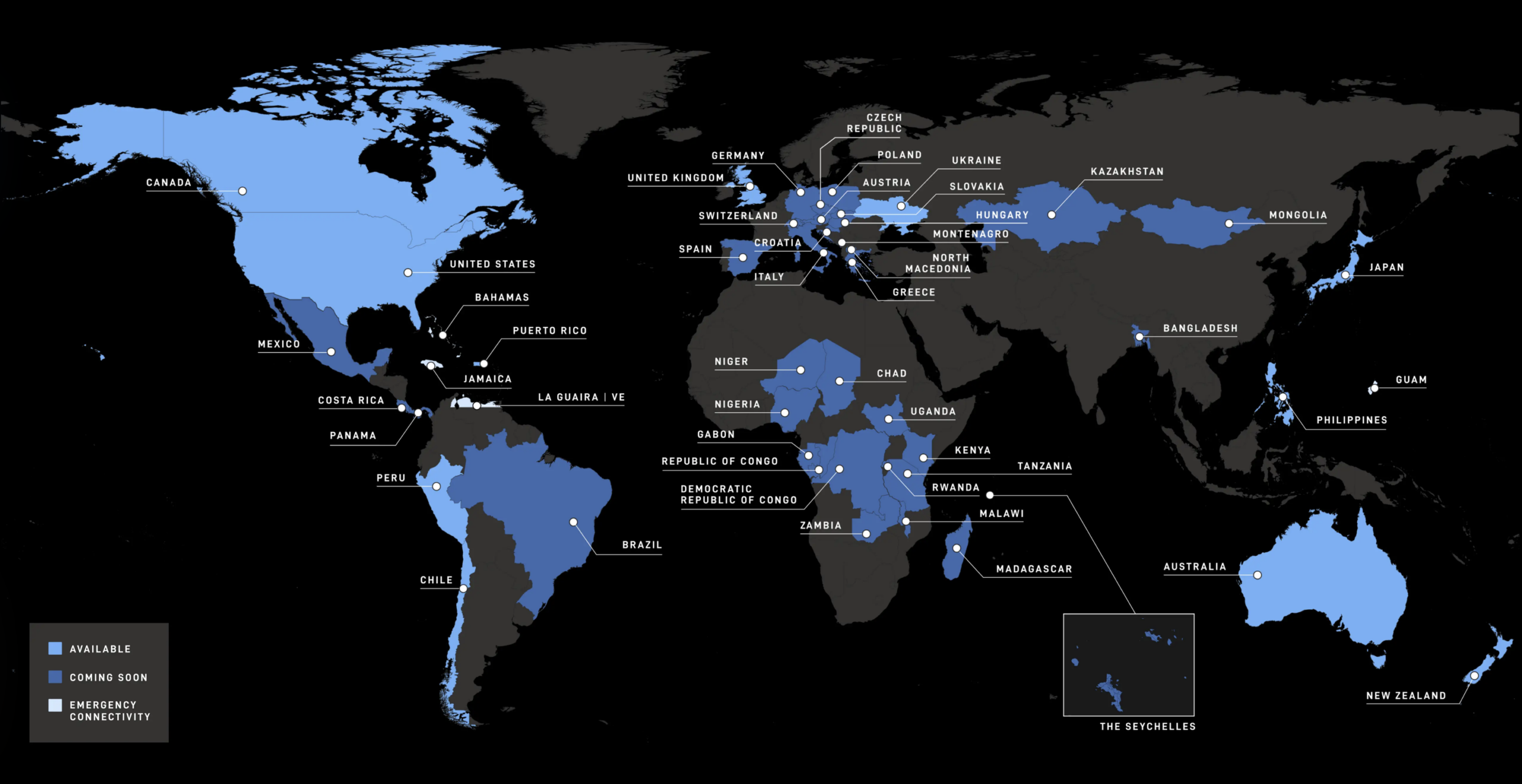
SpaceX has already deployed satellite direct-to-cellular service using cellular spectrum owned by partnered providers, such as T-Mobile in the USA and other carriers around the world.
But rather than continuing with partnering, going forward SpaceX appears to want to start deploying its own spectrum so that it can fully own the network and the customer relationship.
This is a huge change in strategy from the previous partner-focused Starlink Mobile rollout, where Starlink was just an enabling technology that helped carriers close dead zones for their existing customers.
Starlink Mobile Can’t Rely on Satellites Alone
But there is a catch with Starlink Mobile - even with its own dedicated cellular spectrum, the laws of physics dictate that SpaceX will never be able to provide adequate indoor and urban cellular coverage relying only on satellites, as the signals are generally too weak to work indoors and the satellites too widely spaces to serve dense congested areas.
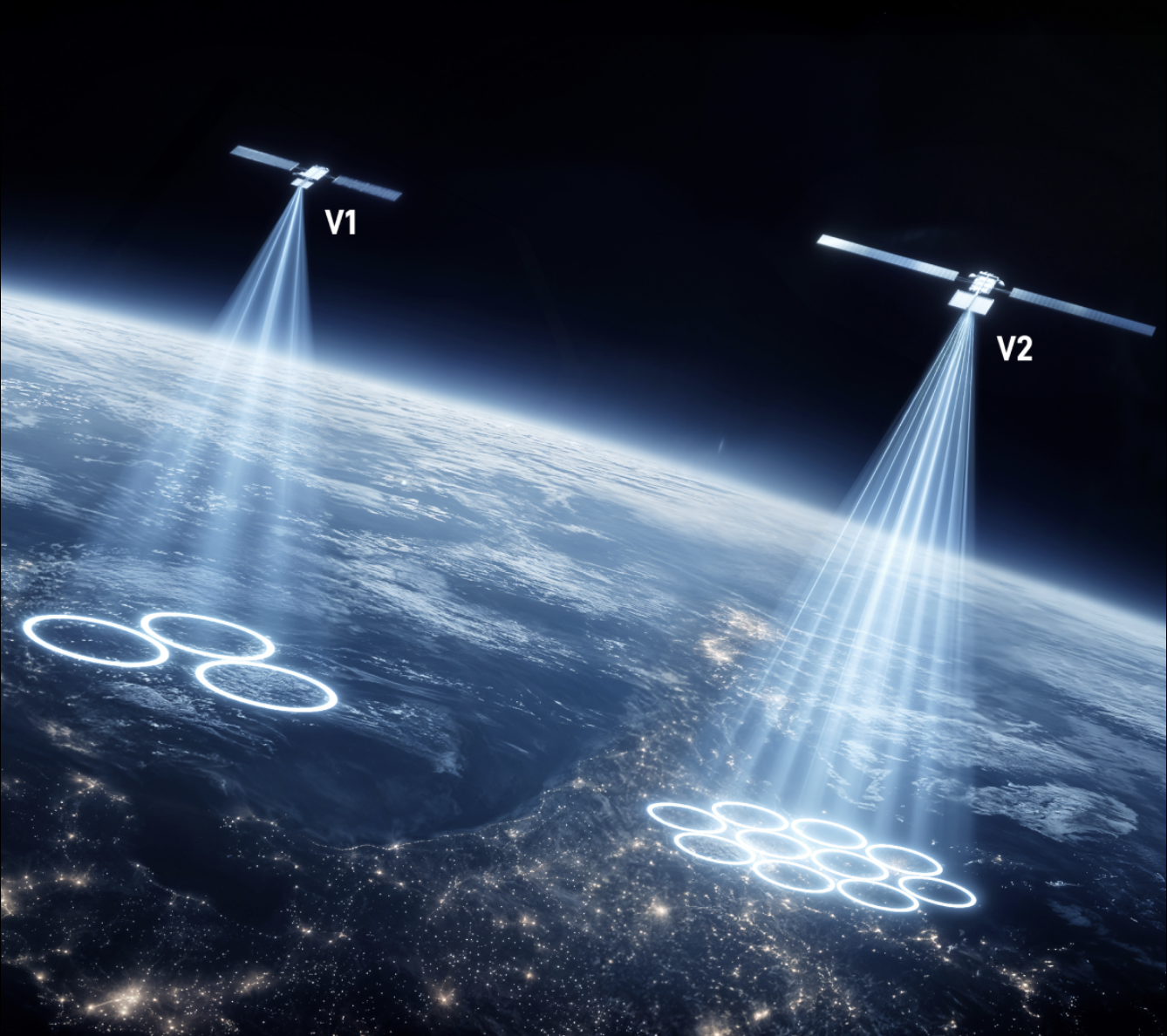
Even the bigger and more powerful Starlink Mobile V2 satellites in the pipeline will be no match for terrestrial cell towers when it comes to reaching indoors or serving crowded urban areas.
A satellite hundreds of miles overhead serving hundreds of square miles just can't compare to what a localized cell tower covering just a single city block with dedicated mid-band spectrum can do.
The only way forward is for SpaceX to build out ground infrastructure as well, and that is a slow and extremely expensive process.
But SpaceX is floating a clever plan to deploy terrestrial coverage much more rapidly than most thought possible.
Rather than build big long-range terrestrial cell towers, SpaceX is considering deploying small cellular base stations alongside selected Starlink installations that combine Starlink broadband receivers with Starlink Mobile cellular transmitters.
In other words, future Starlink residential and business terminals may incorporate the electronics inside them to act as mini cell towers, providing bubbles of cellular coverage to all nearby Starlink Mobile customers. The areas covered would be minuscule compared to what a large traditional tower could cover - but with enough miniature base stations, SpaceX could begin to deliver decent indoor and urban performance in more and more places.
Assuming this is what SpaceX intends to do, if your home or favorite coffee shop has no Starlink Mobile coverage, all you need to do is lobby for a switch to Starlink broadband - and you (and your neighbors) would get indoor Starlink Mobile coverage retransmitted from it.
And when you are outdoors, the Starlink Mobile V2 satellite constellation should be able to fill in all the coverage gaps when you have decent exposure to the sky.
It is a bold strategy, but a lot of moving parts have to come together to make it work, and the details are preliminary and subject to change.
Even in the best case scenario Starlink is starting way, way behind the terrestrial carriers - who have fully mature 5G networks that keep getting better.
Starlink Mobile Timing & Hardware Concerns
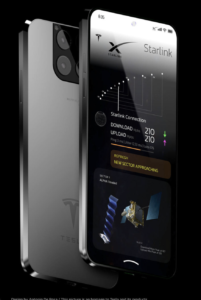
Assuming the plans for Starlink Mobile are not just a bluff, the soonest SpaceX will be able to begin operating service is at the end of 2027.
One key problem is that most current cellular hardware, like routers, hotspots, and phones, - do not have full compatibility with much of SpaceX's new spectrum. SpaceX faces the additional challenge of needing to encourage hardware manufacturers like Apple, Qualcomm, and Samsung to add full support.
Without support from key cellular device makers, Starlink Mobile will be a network with few compatible devices.
Unless SpaceX is bold enough to take on the cellular hardware industry as well by launching its own phone...
A SpaceX phone has been a running joke for years now, but it's still a potential direction Starlink Mobile might explore.
The lobbying for device compatibility has been underway for a while now - and SpaceX likely already knows what 2027 products are in the pipeline, doing the engineering work to ensure compatibility.
Starlink Mobile’s Spectrum Deficit
As we have reported on here before, SpaceX has begun buying up its own cellular spectrum, paving the way towards direct competition with cellular carriers.
But SpaceX is at a huge disadvantage - it is acquiring rights to 65 MHz of low and mid-band spectrum that is suitable for 5G cellular service but it won't officially own that spectrum until late 2027.
Verizon on average (it varies by region) owns ~279 MHz, AT&T owns ~314 MHz, and T-Mobile is in the far lead with ~376 MHz.
Spectrum is like highway lanes - the more you have, the more traffic you can handle. And the big three carriers have a LOT more spectrum than SpaceX.
SpaceX's only alternative to get more may be to buy it, potentially even aiming to acquire one of the legacy carriers.
That would be a blockbuster move - and one that might get stuck in years of regulatory hurdles.
Starlink Mobile Reality Check
To pull off the Starlink Mobile launch and become the nation's new fourth nationwide cellular network - SpaceX needs all of the following:
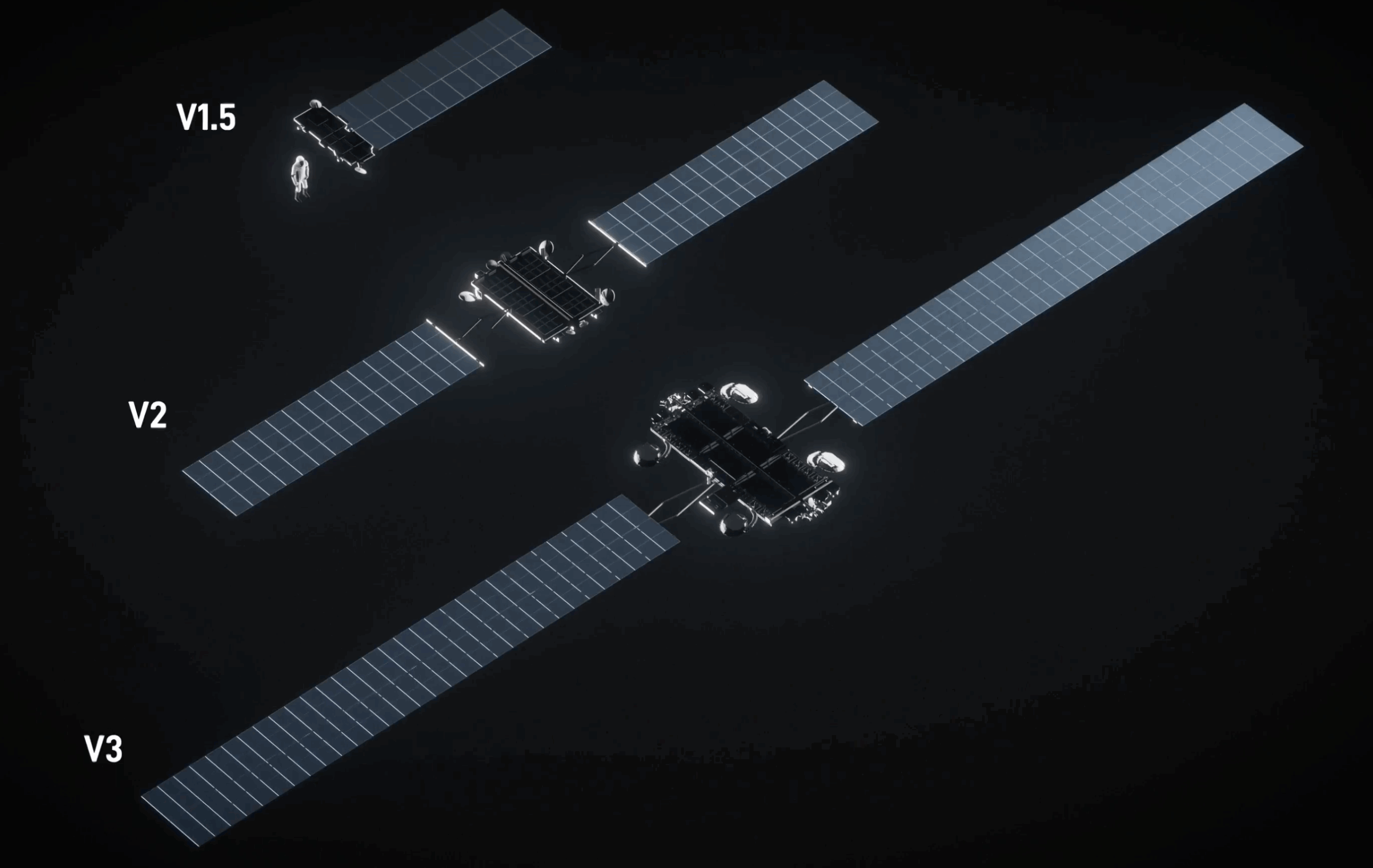
- To deploy the Starlink V3 constellation, beginning a process of essentially replacing many of the satellites in its current constellation. And launching Starlink V3 satellites is dependent on Starship becoming operational - the V3 satellites are too big to launch on a Falcon.
- To deploy a whole new generation of ground terminals with integrated Starlink Mobile small-cell support - replacing many current customer installations or installing them as dedicated Starlink Mobile base stations.
- To convince customers to upgrade to compatible cellular devices that can talk to the new Starlink Mobile network, and provide competitive plan options to lure customers om/
- To convince customers that amazingly competitive introductory prices will not just lead to a constant treadmill of price increases, as we have seen with Starlink broadband.
And the end result may very well be service that lags way behind the big three 5G networks, especially at first.
It sounds like an impossible challenge to pull off - but that is the sort of challenge that SpaceX is known for...
SpaceX Deploys First Starlink V3 Satellites - On a Suicide Mission

In other SpaceX news - on July 24th, Starship's 13th test flight was nearly flawless.
And for the first time - SpaceX launched full-scale Starlink V3 satellites - twenty of them.
But since the rocket was (intentionally) on a suborbital trajectory, these 20 satellites were doomed from the start to just twenty minutes of life.
SpaceX engineers were said to be "speed running" testing them - making sure that the solar panels deployed, laser links connected, and that they synced up with the rest of the Starlink network.
In their brief 20 minutes of life before burning up, SpaceX claims to have been able to establish contact with all 20 satellites and to have clearly proven that the Pez dispenser deployment system was working as intended.
Based on this overall mission success - it seems likely that SpaceX may attempt an actual orbital Starlink V3 mission during one of the next few Starship test flights.
The Starlink Mobile V2 satellites will be based on the Starlink V3 design, so this success is absolutely essential to SpaceX's vision for cellular coverage from space.
HughesNet Files For Bankruptcy
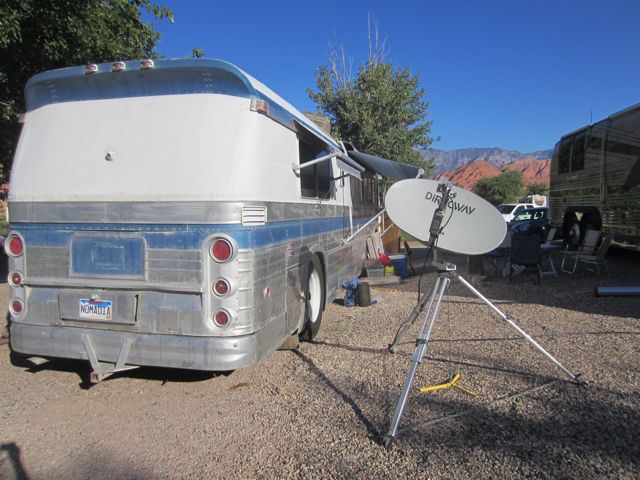
We reported back in December that geostationary satellite industry pioneer HughesNet's "days were numbered" when the company admitted to financial analysts that it was losing so many customers to Starlink that its consumer business just didn't seem viable anymore.
And so it is no surprise at all that HughesNet's parent has at last filed for bankruptcy.
The court documents make it clear that Hughes has come to grips with the reality of Starlink's advantages over geostationary satellites:
"The Company does not expect this trend (the subscriber loss) to reverse. LEO (low-Earth orbit) satellite competition is structural, not cyclical, and the Company’s competitors continue to expand coverage and reduce costs."
Way back when the Mobile Internet Resource Center was founded, HughesNet was the best option there was for keeping connected in the most remote locations. But ever since the dawn of Starlink, geostationary solutions like HughesNet just fundamentally could not compete.
The new Hughes Update page states that service will continue for any existing customers while Hughes restructures to focus on enterprise and government contracts:
"Hughes will continue to serve its customers as it works to strengthen its growing enterprise, government, and defense businesses."
It is hard to imagine any remaining consumers still relying on HughesNet, especially for mobile service.
But if there are any of you left out there - consider this your sign that it is time to move on.
It is the end of an era...
Viasat Struggling
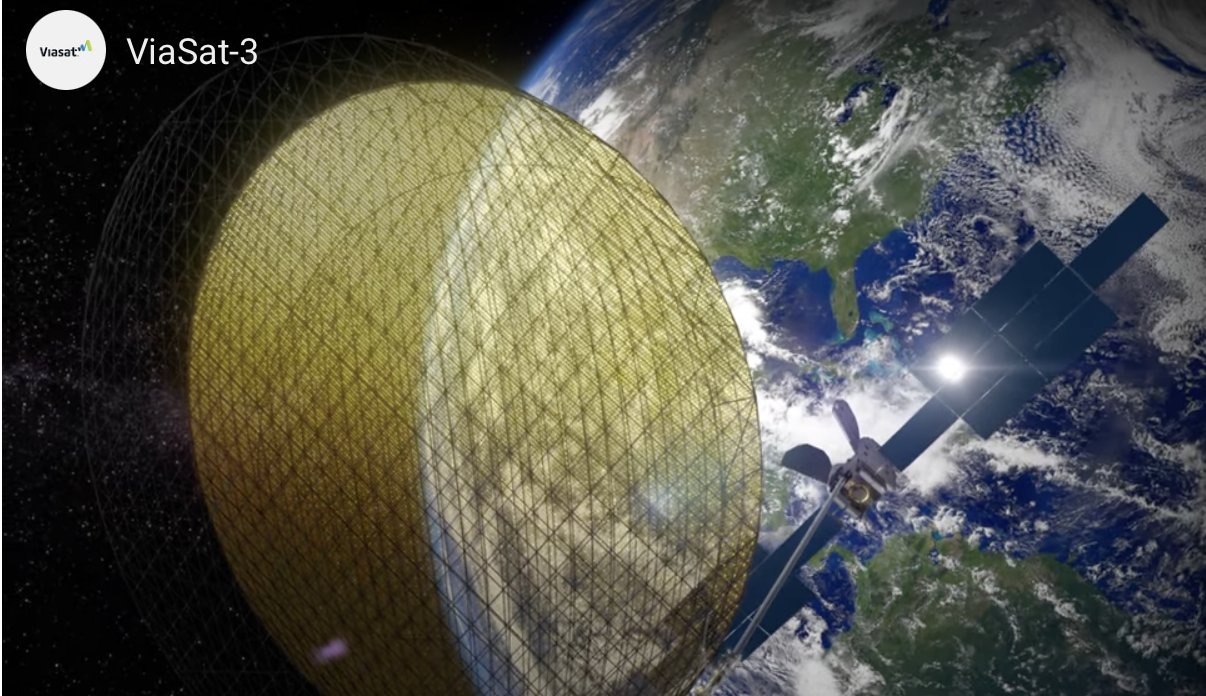
ViaSat never widely offered support for mobile users, but it's Exede service was the primary HughesNet competitor for the residential geostationary satellite internet market - and way back in 2016 ViaSat announced plans to deploy a next generation ViaSat constellation that would dramatically increase capabilities, and which would likely support consumer mobility too.
The ViaSat-3 satellites have at last been put into orbit and are coming online, but WAY behind schedule.
Along the way, ViaSat's residential market collapsed from 603,000 customers to just 115,000 - primarily due to Starlink.
ViaSat may be forced to give up on the consumer market, and like Hughes, it is focusing more on enterprise and government service. ViaSat in particular has actually had a lot of success carving out a niche providing in-flight Wi-Fi to airlines, but is also facing emerging stiff competition from Starlink in that segment.
Overall - yet another satellite competitor bulldozed by the Starlink juggernaut.
AST Launches Three More Satellites - But Service Pushed to 2027
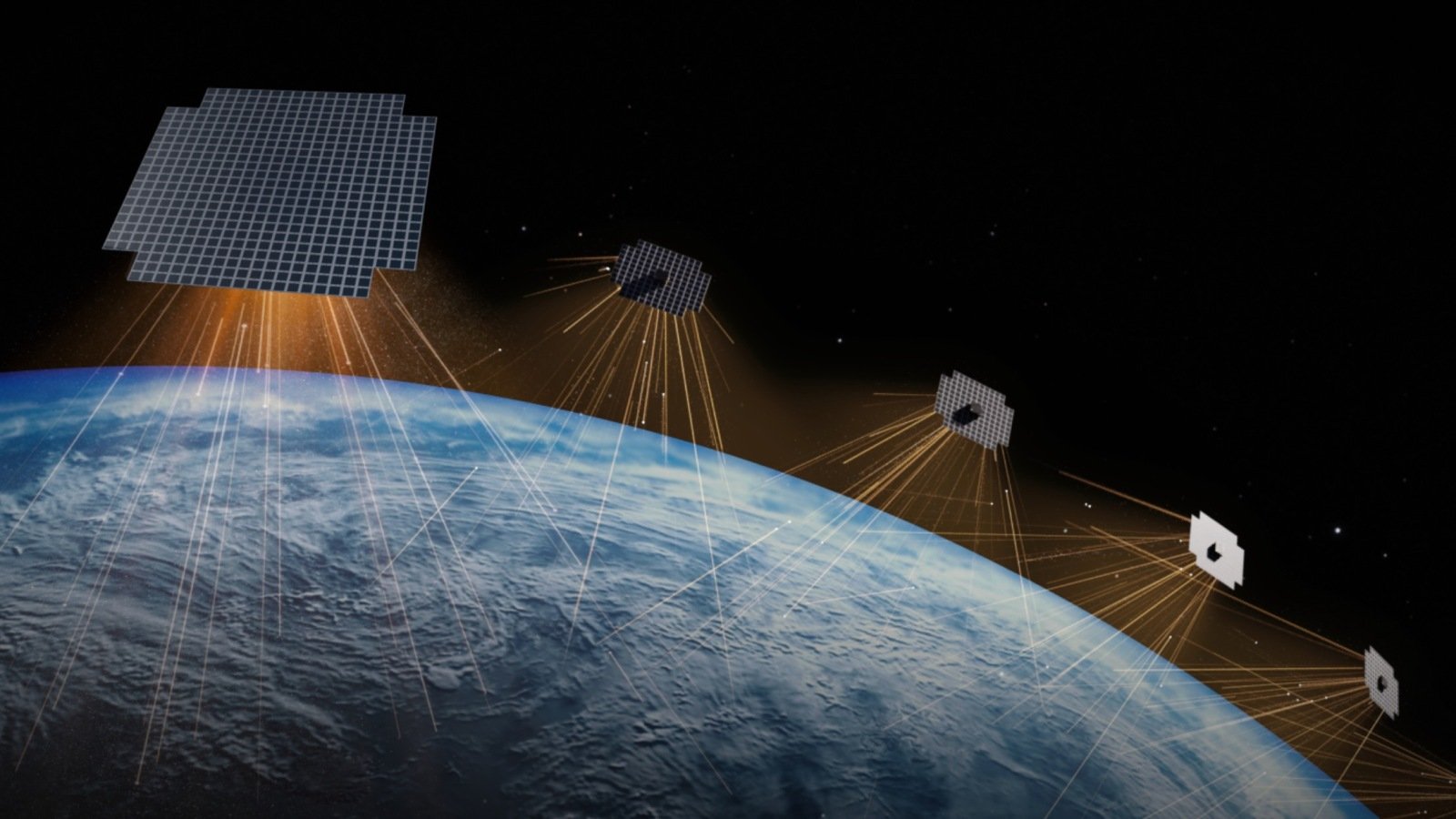
SpaceX is not the only company looking to deliver broadband to cellular devices directly from satellites, and one of the most interesting alternatives we have been tracking for years is AST SpaceMobile. SpaceMobile is being backed by AT&T and Verizon, as well as other cellular carriers around the world looking for a satellite alternative to SpaceX.
As we reported recently, Blue Origin's catastrophic launch pad explosion has delayed SpaceMobile's plans.
AST needs to get more satellites in orbit, and it was relying on Blue Origin for many of its launches. But by pivoting to direct more future launches towards arch-rival SpaceX, SpaceMobile has been able to keep up launching new satellites - including three more last week.
According to AST SpaceMobile, non-continuous connectivity services could start in the U.S. with just 25 BlueBirds, while 45-60 satellites would be needed for continuous coverage across the U.S., Europe and Japan.
While SpaceMobile had once hoped to be ready for commercial service in early 2026, it is now targeting some time in 2027 due to launch availability constraints - with limited beta service potentially available later this year.
But since there won't be enough satellites for continuous coverage, early beta users will likely only have intermittent connectivity, potentially only a few minutes out of every hour - certainly not enough to put into practical use other than as supplementary coverage for cellular.
Amazon Leo Update

Since our last update, Amazon has managed two more Leo constellation launches - 36 satellites on a European Ariane 6 in June, and 29 on an Atlas V in July.
But with Vulcan and New Glenn still grounded, Amazon is stuck with limited options to keep up the pace and get enough satellites into orbit to bring the Leo constellation online.
The latest updates from Blue Origin are that it is still targeting a return to flight for New Glenn by the end of 2026 - and the Vulcan rocket may be ready for Amazon Leo launches as early as September.
But both the Vulcan and New Glenn rely on the BE-4 engine - and the investigation into the pad explosion seems to be pointing to an engine valve failure as the cause. If that failure is confirmed - the Vulcan may remain grounded too.
If either the pad rebuild or the BE-4 engine investigation schedules slips, Amazon's optimism around launching Leo beta service this year may evaporate.
Concluding Thoughts
Without a doubt - Starlink has changed the game when it comes to satellite broadband, and it now hopes to tackle transforming the entire cellular industry as well.
But don't expect history to automatically repeat itself.
Starlink's low-earth-orbit (LEO) satellite constellation with swarms of satellites just a few hundred (~342) miles overhead has fundamental technical advantages that traditional satellites in fixed geostationary orbit 22,236 miles above the equator just couldn't compete against.
But Starlink satellites have a disadvantage of their own compared to terrestrial cellular towers that are often just a few miles away.
Will SpaceX's hybrid network design be able to deliver the best of both worlds, assuming that's what SpaceX intends to do?
It will be absolutely wild to see what the future holds as the industry titans go to war.
Further Reading
- Mobile Satellite Internet Options -
 Our featured guide on all the current and future satellite internet options of interest to RVers and cruisers.
 - All our our Satellite Internet Resources - Our collection of guides, gear center entries and news coverage on satellite internet.
- Starlink Satellite Internet For Mobile RV And Boat Use - Our featured guide focused on taking advantage of SpaceX's Starlink on the go.
- Satellite Industry Update - Our latest deep dive into the state of the satellite internet world.
And here is all of our latest satellite internet coverage:







 Mobile Internet Resource Center was founded by Chris & Cherie of