
Key points:
- Blue Origin's New Glenn rocket failed to reach its intended orbit on Sunday, leaving AST SpaceMobile's BlueBird 7 destined to burn up as a total loss.
- New Glenn has now been grounded by the FAA, pending a full investigation into the failure.
- Both the AST SpaceMobile and Amazon Leo are counting on rides from New Glenn for building their constellations - if New Glenn remains grounded for long, this could slow their deployment.
- There is some good news... The New Glenn first stage was successfully reused for the first time, and landed on a drone ship once again.
As we wrote about last week - there are currently three next-generation broadband satellite constellations under construction with ambitions of being able to communicate directly with mobile users and even small cellular devices: SpaceX Starlink, AST SpaceMobile, and Amazon Leo.
And with one botched launch this past weekend, Blue Origin has managed to derail both SpaceMobile and Leo.
AST SpaceMobile and Amazon Leo are both counting on the New Glenn rocket as part of their launch campaigns to build out their constellations. And with New Glenn now being grounded by the FAA pending a full investigation, these programs may be forced to delay launches or to turn to rival SpaceX for additional rides to orbit.
Whether this launch failure proves to be just a minor hiccup or a major setback remains to be seen.
But there is at least some good news - while New Glenn's upper stage failed, the booster stage performed perfectly, and once again nailed its landing.
So what does all this mean for the current satellite mobile internet space race?
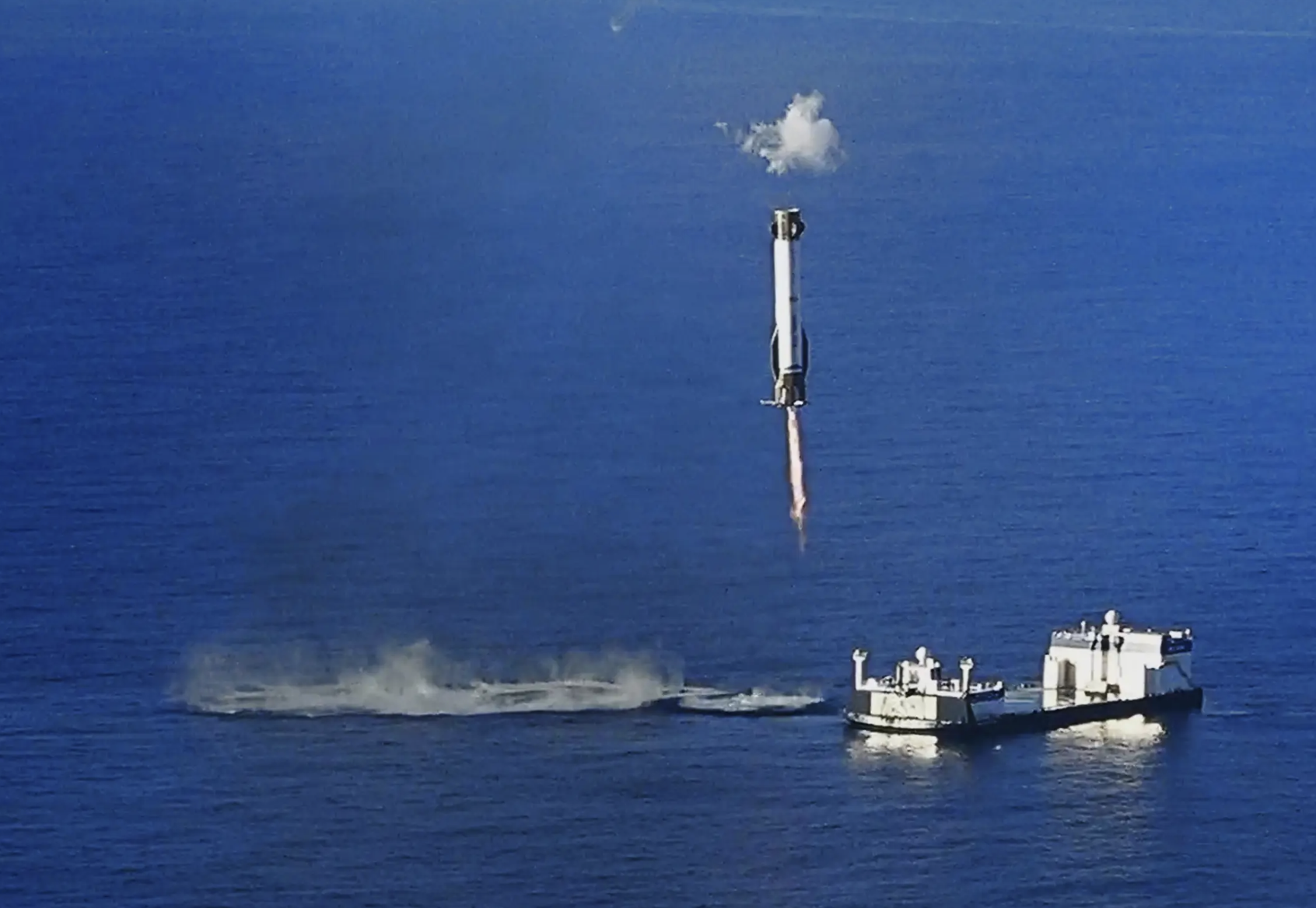
Table of Contents
New Glenn Failure Video
The Importance of New Glenn
SpaceX's Falcon 9 is the world's first affordably reusable rocket, and it has come to absolutely dominate the market for satellite launch services.
Even Starlink competitors (including both Amazon and SpaceMobile!) have been ponying up to hitch a ride on the incredibly reliable Falcon.
Amazon founder Jeff Bezos owns rocket company Blue Origin - which has to date been mostly known for sending wealthy tourists on suborbital joyrides. But Blue Origin's bigger focus has been on developing the massive New Glenn rocket, which is aspiring to at last offer a credible and also reusable Falcon 9 alternative, only even larger.
It looked like New Glenn was well on its way to proving itself after sending a NASA probe to Mars and then nailing a landing during only its second flight attempt on November 13th last year, and Blue Origin felt confident enough to reuse that booster stage for this third New Glenn mission this past weekend, launching AST SpaceMobile's BlueBird 7 satellite.
Nailing booster reuse is a pretty major accomplishment- SpaceX did not land a Falcon until its 20th flight, and did not start reusing boosters until the 32nd Falcon flight.
Now, of course, SpaceX makes Falcon 9 reuse seem routine - but the whole concept of landing and re-flying a rocket with minimal refurbishment seemed like science fiction not too long ago.
Now Blue Origin and New Glenn seemed to have joined SpaceX in the reusable booster club.
But unfortunately, while the New Glenn booster stage nailed the tricky landing, the New Glenn upper stage failed at what should have been the (relatively) easy part of the flight.
AST SpaceMobile confirmed the failure, issuing a statement saying:
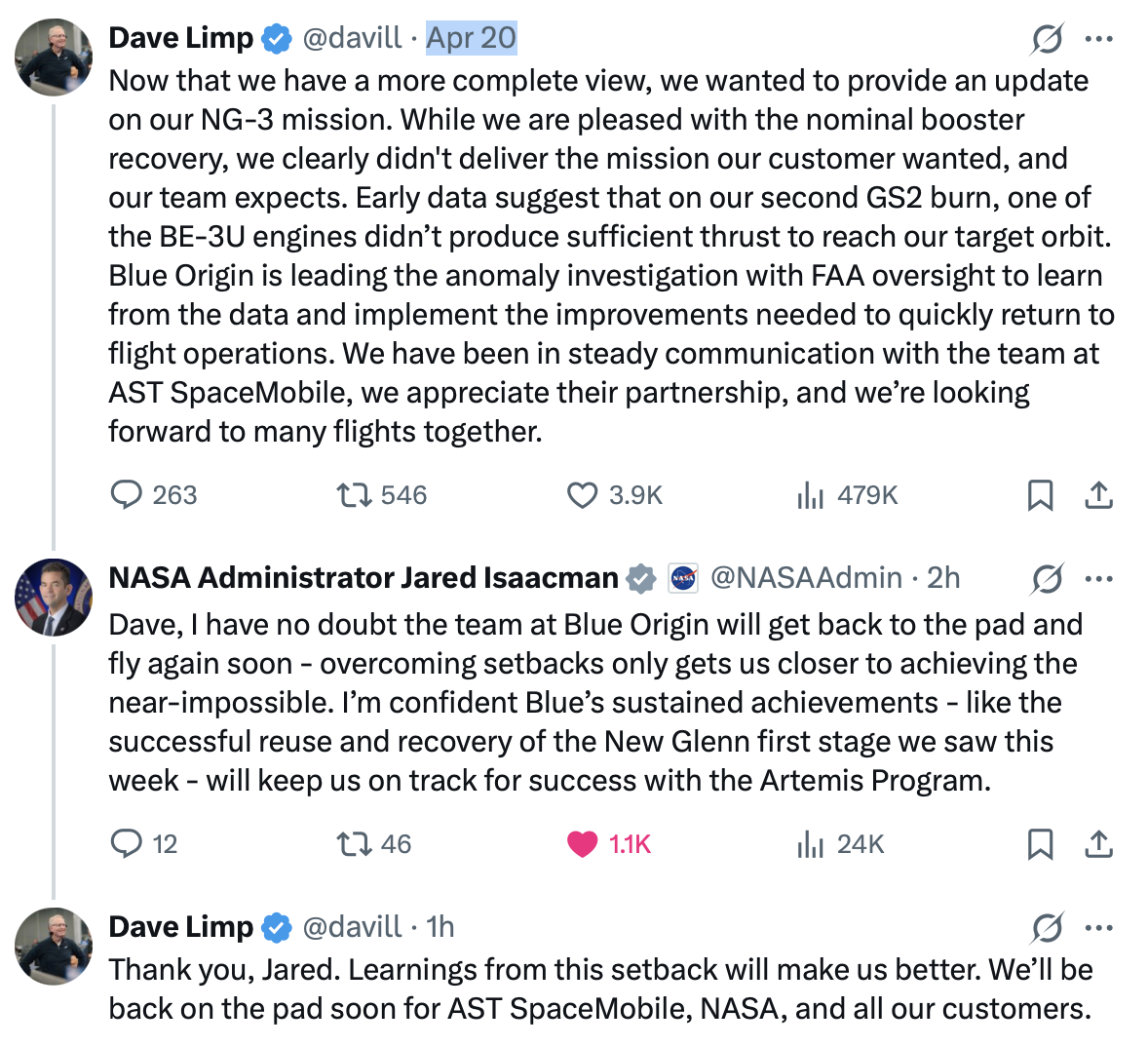
"During the New Glenn 3 mission, BlueBird 7 was placed into a lower than planned orbit by the upper stage of the launch vehicle.
While the satellite separated from the launch vehicle and powered on, the altitude is too low to sustain operations..."
The mission has already been declared a total loss, and the FAA has grounded all planned New Glenn flights until the cause of the failure is found and addressed.
AST SpaceMobile Faces a Setback
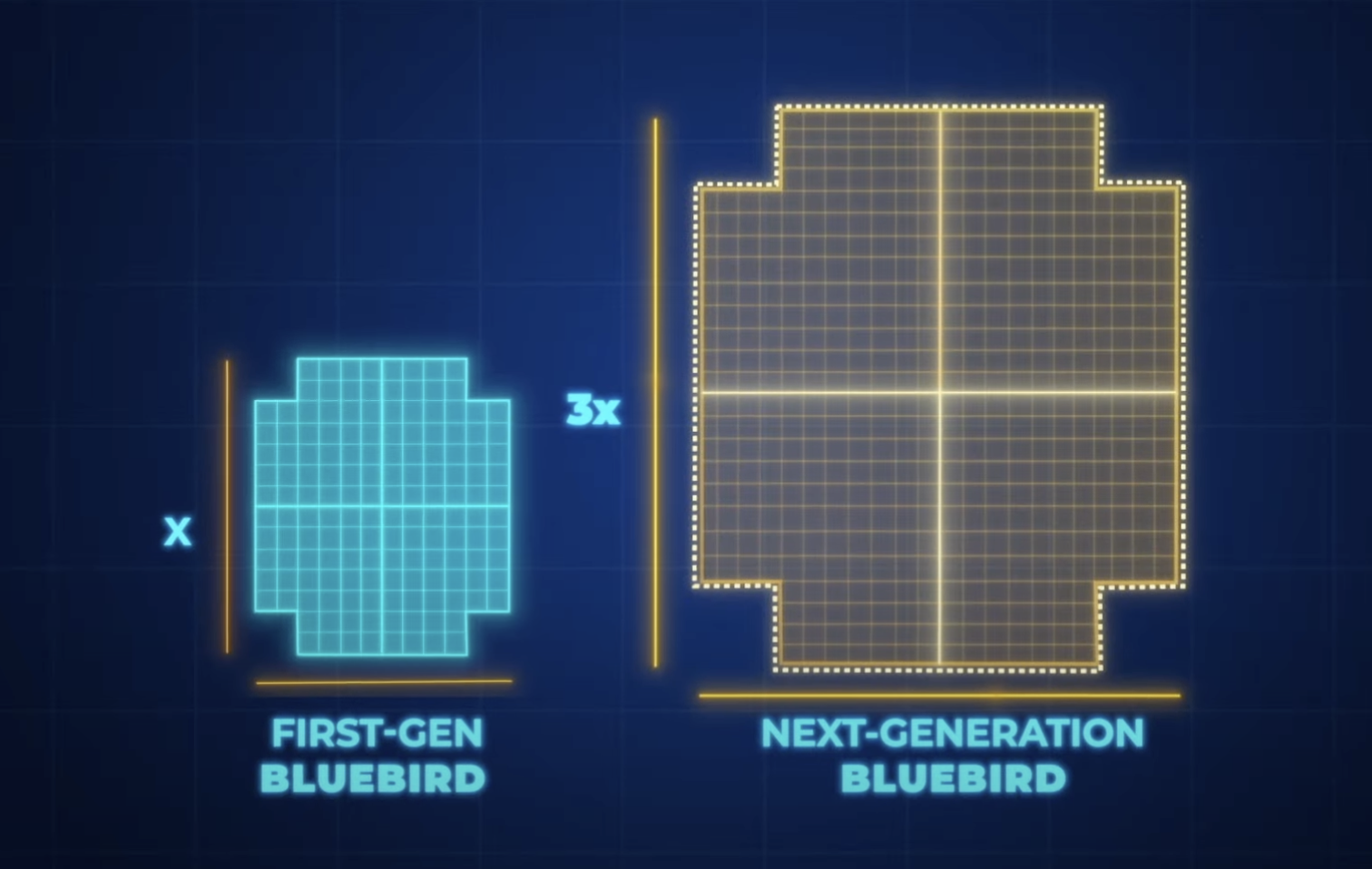
BlueBird 7 was going to be the second full-size satellite in AST SpaceMobile's direct-to-cell satellite constellation - in the USA, destined to provide service in partnership with both AT&T and Verizon.
SpaceMobile stands out from Starlink by using absolutely gigantic antennas on its satellites - theoretically sensitive enough to communicate with normal, unmodified cellular devices, even indoors.
But SpaceMobile does not yet have enough satellites in orbit to begin offering consumer services.
The SpaceMobile constellation operates at a higher orbit than Starlink or Amazon Leo, so it needs fewer satellites to enable continuous nationwide coverage. But SpaceMobile has said it will need at least 45-60 satellites before it has enough to turn on service in the continental USA, and it will take approximately 90 satellites to have 24/7 coverage worldwide.
With only one functional full-sized satellites so far, in addition to a series of smaller test satellites, SpaceMobile has a LONG way to go to get to the point of offering consumer service.
AST SpaceMobile's release on the launch failure notes:
"BlueBird 7 would have been AST SpaceMobile’s eighth deployed into low Earth orbit and is one of many planned for its space-based cellular broadband network. The company is currently in production through BlueBird 32, with BlueBird 8 to 10 expected to be ready to ship in approximately 30 days.
The company continues to expect an orbital launch every one to two months on average during 2026, supported by agreements with multiple launch providers, and it continues to target approximately 45 satellites in orbit by the end of 2026."
Earlier updates from SpaceMobile were targeting as many as 60 satellites in orbit by the end of 2026.
Future launches will likely carry more than one BlueBird to orbit at a time - but SpaceMobile is going to really need to pick up the pace to be on track to enable any sort of commercial service before the end of 2026.
UPDATE: Shortly after this story was first published, AST SpaceMobile received a bit of good news. The FCC has now officially approved SpaceMobile's request to build out a full 248 satellite constellation. Up until now - SpaceMobile only had a license to build out the first 25 satellites.
Amazon Leo Impacted Too?
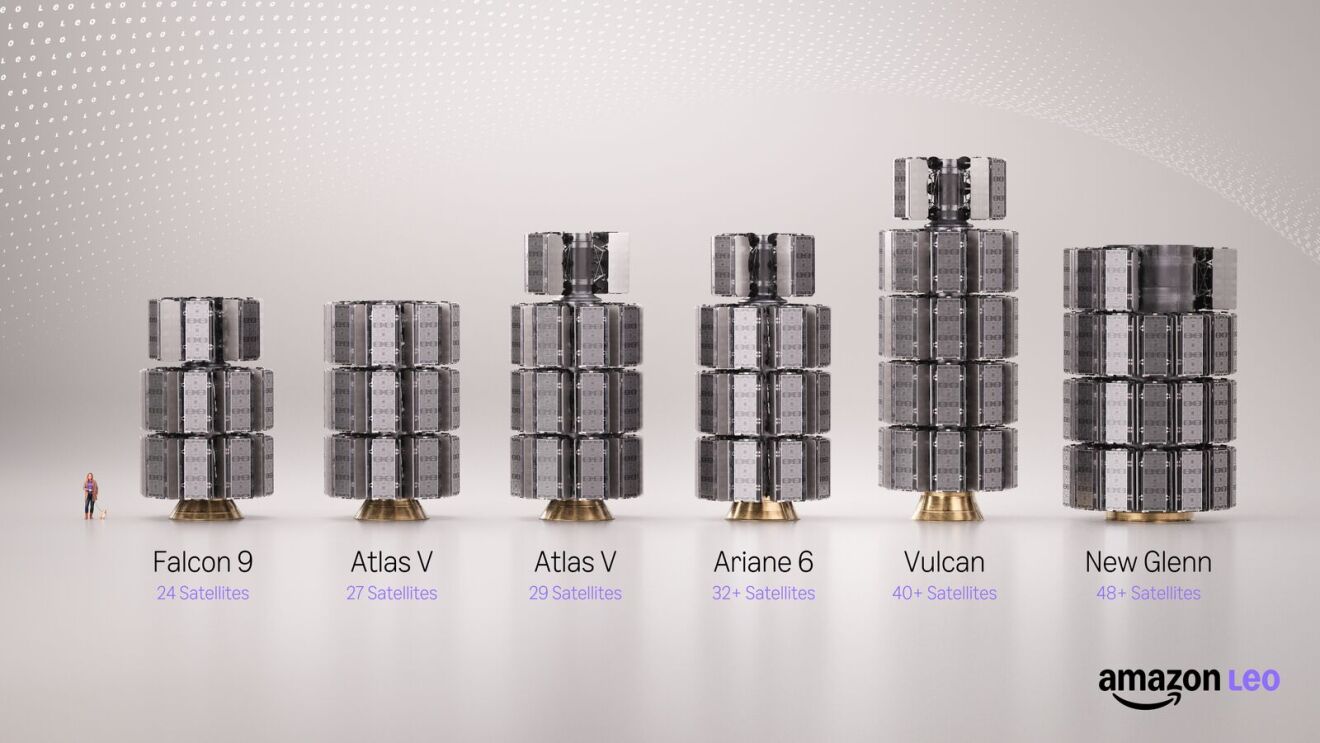
Though it was a SpaceMobile satellite lost to this weekend's botched launch, Amazon's Leo constellation is also dependent on New Glenn.
But Amazon has a lot of other alternative rides already lined up - so it may be able to better ride out any New Glenn delays.
Amazon has the following rockets contracted to carry the Amazon Leo constellation to orbit over the next few years:
- ULA Atlas V - 29 satellites per launch. Five of eight launches have been completed. Next launch scheduled April 27th.
- SpaceX Falcon 9 - 24 satellites per launch. Three launches completed, ten more contracted.
- ULA Vulcan Centaur - 40+ satellites per launch. 38 launches are scheduled, starting in mid-2026. This schedule has already slipped.
- ESA Ariane 6 - 32+ satellites per launch. One of sixteen launches complete, next scheduled for April 28th.
- Blue Origin New Glenn - 48+ satellites per launch. 27+ launches contracted. Launches were slated to start later in 2026.
Amazon had been hoping to have as many as 12 New Glenn Leo launches before the end of 2026.
With this weekends mishap, that is now looking like a serious stretch goal.
Concluding Thoughts
Neither Amazon Leo nor AST SpaceMobile is exclusively dependent on New Glenn.
But for both of them, New Glenn was slated to be a major part of their launch campaigns.
Depending on how hard it is to track down and resolve the problem that derailed the New Glenn upper stage, these launch campaigns could be significantly delayed.
The big winner here is likely SpaceX.
Not only are two up-and-coming competitors hitting a speed bump, but they both may now feel forced to turn to SpaceX to book additional Falcon 9 flights, too!
And in the meantime, SpaceX is rapidly advancing the development of its Starship rocket, which is even larger and more capable than New Glenn.
And Starship is aiming to leap forward on reuse as well.
On New Glenn and Falcon, only the booster stage returns to land for reuse, and the upper stage is lost. But Starship's upper stage is designed for reuse as well - aiming to become the first fully reusable ride to orbit.
The next Starship test flight is slated for next month.
The space race continues!
Further Reading
- Mobile Satellite Internet Options -
 Our featured guide on all the current and future satellite internet options of interest to RVers and cruisers.
 - All our our Satellite Internet Resources - Our collection of guides, gear center entries and news coverage on satellite internet.
- Industry Update: Late 2025 Satellite Mobile Internet Update: Amazon Leo Getting Ready to Roar? HughesNet Bowing Out? ViaSat Back on Track? SpaceMobile Going Big… And More! - Our latest deep dive into the state of the satellite internet world.
And here is all of our latest satellite internet coverage:








 Mobile Internet Resource Center was founded by Chris & Cherie of