
The US Federal government has made some changes and clarifications to the router ban, first introduced back in March, and granted more exemptions and conditional approvals.
The biggest change for our audience is that the FCC has clarified that mobile hotspot devices are included in the ban, and that enterprise gear and smartphones with hotspot capability are NOT included. An updated FCC FAQ includes this chart:
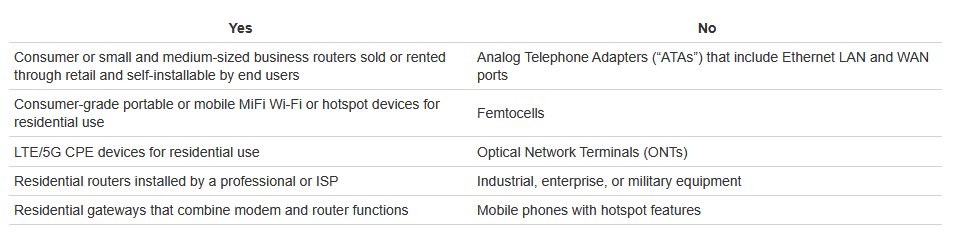 This explains why the Netgear conditional approval we previously reported on includes Netgear's mobile hotspot lines.
A second major change is that the FCC extended the waiver for routers approved before the ban, so routers already approved can continue to receive software and firmware updates through at least January 1, 2029.
The updated waiver now covers more changes, but it is still limited to software/firmware updates intended to mitigate harm to consumers. That includes security patches, bug fixes, and compatibility updates needed to keep existing devices working. Manufacturers can't add new features or functionality, and the waiver only applies to already-authorized devices.
This is good news for owners of existing gear as it means companies can provide security updates for at least the next three years.
 The third development is that AT&T was granted a narrow, one-year waiver allowing its suppliers to make limited hardware changes to previously certified routers through May 15, 2027.
Specifically, the waiver only covers the substitution of some hardware components and memory modules, and the FCC said the changes cannot improve performance, alter functionality, create a “new” model, or replace a US-made part with a foreign-made one. The issue here is supply chain shortages, and the waiver allows AT&T to source equivalent parts from different manufacturers.
While this only applies to certain AT&T-branded routers, it does indicate the FCC is willing to grant similar exceptions to other companies to address supply-chain disruptions.
Finally, for conditional approvals, the FCC has granted several more since the first approval for Netgear, but most of these are for landline-oriented equipment rather than mobile internet gear. One notable addition, though, is that the routers for Amazon Leo have conditional approval, so the Starlink competitor won't be hindered by the router ban in bringing Leo to consumers - the bottleneck for Leo remains orbiting a sufficient number of satellites.
Key Mobile Internet Related Considerations:
- The FCC clarified that the router ban includes mobile hotspot devices but not enterprise gear or mobile phones with hotspot capability.
- There have been more conditional approvals granted, but none for mobile internet gear except for Amazon Leo routers.
Video Story:
For more information:
Related Content at the Mobile Internet Resource Center:
- Guide: Selecting a Router For Use in an RV or Boat
- Guide: Understanding & Selecting Mobile Hotspot Devices (MiFi, Jetpacks, AirCards)
- Guide: Top Cellular Data Plans for RVers & Cruisers – Verizon, AT&T, and T-Mobile
Related Updates




 Mobile Internet Resource Center was founded by Chris & Cherie of