

Key points:
- Globalstar has been Apple's satellite partner since the iPhone 14 became the first major phone to incorporate satellite direct-to-cell capabilities.
- Rumors have been swirling about both Amazon and SpaceX making moves to acquire Globalstar - and Amazon has now come out on top, with plans to incorporate Globalstar into the Amazon Leo satellite constellation.
- Amazon Leo's public launch has been pushed back to mid-2026 - but Amazon is now promising better performance and lower cost than "alternatives".

In our last big satellite industry update in December, we reported on rumors that Apple's satellite partner Globalstar was potentially putting itself up for sale.
Globalstar is a long-time leader in satellite direct-to-device capabilities - being the company behind the SPOT trackers that are popular with wilderness explorers.
Apple utilized the existing Globalstar satellite constellation and spectrum rights in 2022 to bring satellite capabilities to the iPhone 14, and Apple has been funding Globalstar's next generation constellation development to bring out even more satellite capabilities in the future.
Many analysts expected SpaceX to try and gobble up Globalstar - in part, to cut off development of Globalstar's next generation C-3 constellation - and to get Apple fully on board supporting the next generation of Starlink Direct-to-Cell service.
But to the surprise of many - today Amazon announced that it was acquiring Globalstar, with plans to incorporate Globalstar's direct-to-device capabilities into the next generation of the Amazon Leo satellite constellation.
And Apple enthusiastically joined in the announcement, giving Amazon Leo a huge boost in credibility.
What does this mean for the future of Amazon Leo?
And when is Amazon Leo going to debut, anyway?
Read or watch on!
Table of Contents
Amazon Leo Update Video
Amazon Leo Update
We have been tracking Amazon Leo (previously known as 'Project Kuiper') since 2019, when Amazon first revealed its plans to build a global broadband satellite internet constellation designed to rival SpaceX's Starlink.
Amazon has claimed that it is setting out "to build the most advanced and the most modern communications system in the world" and "the most advanced satellite network ever built" - with a planned total of 3,232 laser interconnected satellites to be deployed over more than 100 launches.
Amazon has been investing heavily in Leo ever since - beginning its launch campaign in April 2025, and starting previews and testing with enterprise customers in November.

Amazon executive Ricky Freeman said at a satellite industry conference in September 2025 that Amazon Leo was on track to launch service in five countries (Canada, France, Germany, the UK, and the US) in Q1 2026.
That deadline has obviously been missed.
But in a letter to shareholders last week, Amazon CEO Andy Jassy revealed a new timeline, saying Amazon Leo service was now slated to debut in mid-2026.
And he went on to make some bold claim around how Leo will compare with "alternatives" (ie Starlink):
"Over the last seven years, we’ve built a low Earth orbit satellite network (Amazon Leo) and put more than 200 satellites into space (which is the third-largest low Earth orbit network operating today). With a few thousand more satellites launching in the coming years, the constellation is expanding rapidly. Apart from enabling this connectivity, Leo will offer three unique benefits. First, the performance will be stronger (about six to eight times better on uplink, and two times better on downlink) than what customers have access to now. Second, this performance will come at a lower cost than alternatives."
If Amazon Leo can manage to be both faster and cheaper than Starlink (at least by some metrics) - the competitive future for satellite internet options will be exciting indeed!
Leo Constellation Update
Amazon's original FCC license required it to have launched at least half of its planned satellites by July 2026.
It is not even going to come close to hitting this deadline - and Amazon has been forced to ask the FCC for a waiver to buy itself more time.
SpaceX is filing objections to try and derail Amazon getting an extension, but with so many Amazon Leo satellite launches now in the pipeline it seems likely that the FCC will give Amazon all the time that it needs now.
To get enough Leo satellites into orbit to meet its license obligations and to enable continuous coverage, Amazon has contracted for launches using rockets from nearly every global provider - including from arch-rival SpaceX.
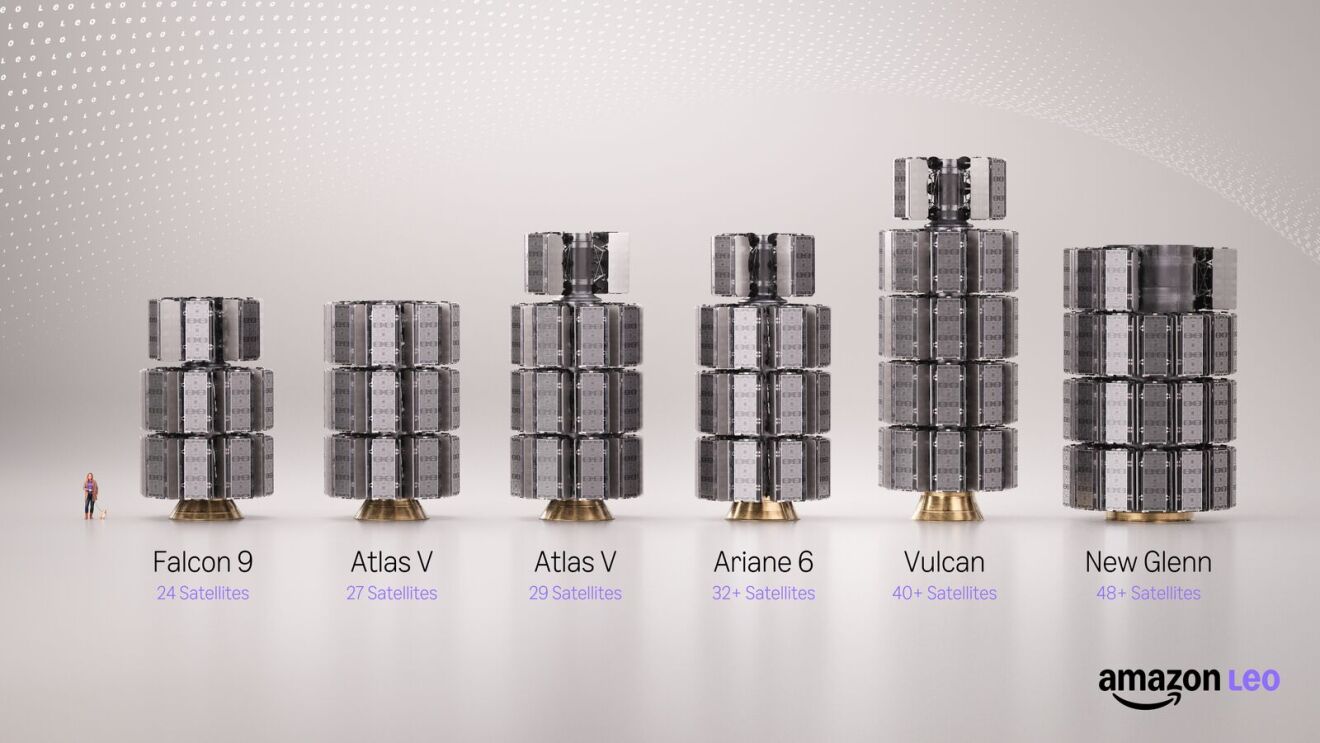
Amazon has had nine Leo launches so far - with two more (an Atlas V and an Ariane 6) coming up later in April.
Once ULA's Vulcan rocket (40+ satellites per launch) and Blue Origin's New Glenn rocket (48+ satellites per launch) are ready for a rapid launch cadence, Amazon should be in a position to much more rapidly expand the Leo constellation.
Amazon says it has more than 200 Leo satellites already assembled and stacked for launch, and a current capability to manufacture up to 30 new Leo satellites a week.
At this pace, Amazon has a LONG way to go to even begin to catch up with SpaceX's Starlink.
But even in this early stage - Amazon seems to be winning over some enterprise customers. Delta and JetBlue have announced they are planning on using Amazon Leo for inflight connectivity in the future, and the newly announced Amazon Leo Aviation Antenna promises 1 Gbps download and 400 Mbps uplink speeds - much faster than SpaceX currently offers.
Amazon Leo & Globalstar
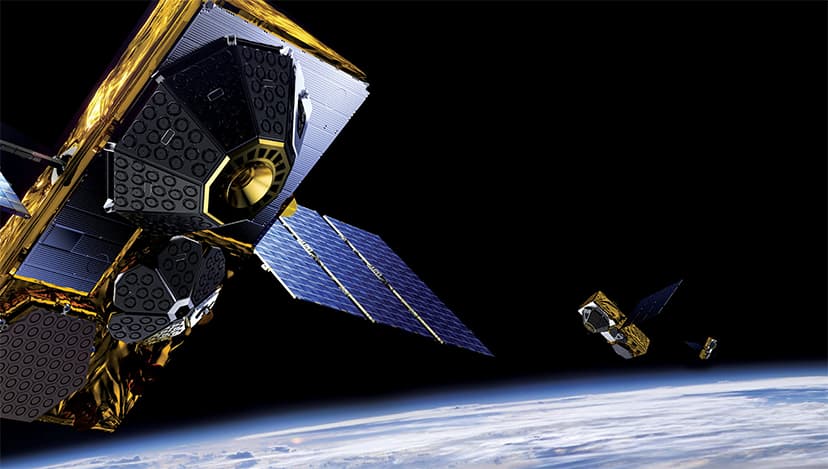
Up until now Amazon has had little to say about using the Leo constellation for direct-to-device capabilities.
But that is all changing with the acquisition of Globalstar.
From Amazon's press release:
"Today Amazon.com, Inc. and Globalstar, Inc. announced that they have entered into a definitive merger agreement under which Amazon will acquire Globalstar, enabling Amazon Leo to add direct-to-device (D2D) services to its low Earth orbit satellite network and extend cellular coverage to customers beyond the reach of terrestrial networks. In addition, Amazon and Apple announced an agreement for Amazon Leo to power satellite services for iPhone and Apple Watch, including Emergency SOS via satellite."
Amazon will be taking over Globalstar's global spectrum rights (including exclusive control of 5G band n53), and its existing and upcoming new satellites.
It seems at first Amazon will be running Globalstar in parallel with the Amazon Leo broadband constellation - providing ongoing support for satellite connected iPhones and Apple Watches.
But a future generation of Amazon Leo satellites will fully incorporate much more advanced direct-to-device capabilities, building on this foundation:
"Beginning in 2028, Amazon Leo will deploy its own next-generation D2D satellite system, allowing Amazon to deliver more advanced voice, data, and messaging services to mobile phones and other cellular devices. The Leo D2D system will offer substantially higher spectrum use and efficiency than legacy direct-to-cell systems, which translates into faster speeds and better performance for customers. It will also integrate seamlessly with Amazon’s first- and second-generation Leo systems, forming a powerful, unified network that combines fixed and mobile satellite services to support a wide range of customers and use cases. The complete Amazon Leo network will include thousands of advanced satellites in low Earth orbit and have enough capacity to support hundreds of millions of customer endpoints around the world."
And Apple seems to be fully on board in collaborating with Amazon, for both current and future satellite services. Apple Senior Vice President Greg Joswiak said:
"Apple and Amazon have a long and proven track record of working together through Amazon’s core infrastructure services, and we look forward to building on that collaboration with Amazon Leo. This ensures our users will continue to have access to the vital satellite features they have come to rely on, including Emergency SOS, Messages, Find My, and Roadside Assistance via satellite, so they can stay safe and connected while off the grid.”
Amazon Devices & Services lead Pano Panay said today:
"We’ve also signed an agreement with (Apple) to become their primary satellite service provider for iPhone and Apple Watch. Apple customers are already connected out of cell range, and they’ll do that with Amazon Leo satellites in the future."
Primary is not "exclusive" - it remains to be seen whether Apple goes all-in betting on Amazon Leo, or also builds supports Starlink's next generation direct-to-cell network into future iPhones.
Concluding Thoughts
Amazon's deal to acquire Globalstar is valued at over $11.6 billion dollars, and is of course subject to regulatory approval.
Amazon expects the deal to close sometime in 2027, but with the majority of Globalstar shareholders already on board - it seems unlikely that anything will derail things.
FCC Chairman Brendan Carr has already gone on record about being "very open-minded" about this deal, stating that he likes the idea of three competitors in the direct-to-cell market: SpaceX, Amazon, and AST Spacemobile.
SpaceX has an undeniable massive head start - but it is exciting indeed to see competition heating up!
We will be very eagerly awaiting what Amazon has to show us in "mid 2026" when it is at last ready to unleash Leo to the public.
Further Reading
- Mobile Satellite Internet Options -
 Our featured guide on all the current and future satellite internet options of interest to RVers and cruisers.
 - All our our Satellite Internet Resources - Our collection of guides, gear center entries and news coverage on satellite internet.
- Industry Update: Late 2025 Satellite Mobile Internet Update: Amazon Leo Getting Ready to Roar? HughesNet Bowing Out? ViaSat Back on Track? SpaceMobile Going Big… And More! - Our latest deep dive into the state of the satellite internet world.
And here is all of our historical Amazon Leo (originally known as 'Project Kuiper') coverage:





 Mobile Internet Resource Center was founded by Chris & Cherie of