
Key Points:
- Blue Origin's massive New Glenn rocket exploded on the pad last week during an engine test. Pad damage appears to be extensive - but Blue Origin is aiming to return to flight by the end of the year.
- Amazon Leo and AST SpaceMobile are relying on New Glenn and ULA's Vulcan to deploy their satellite constellations, and New Glenn's offline status will likely delay the commercial rollout of both next-generation constellations.
- ULA's Vulcan uses the same rocket engine as New Glenn, and though already grounded for other reasons - Vulcan may remain out of service even longer if the New Glenn explosion investigation uncovers any engine design flaws.
- Meanwhile - SpaceX has resumed Starship testing, and the recent launch actually tested some Starlink V3 components for the first time. But the mission was only partially successful, and the Super Heavy booster's failure to return properly has prompted an FAA investigation.
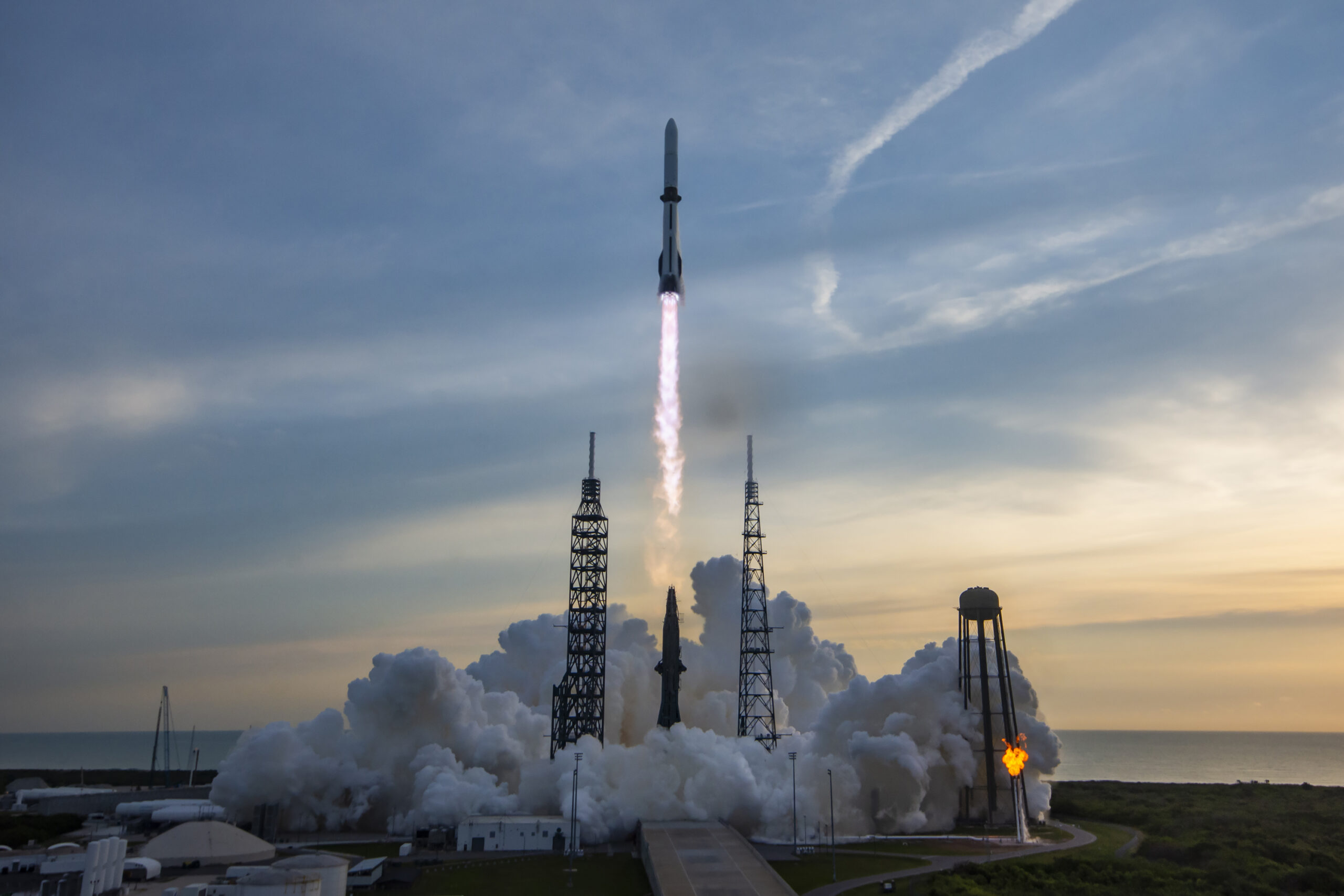
Last Thursday evening the hopes of a Starlink competitor coming online any time this year went kaboom when Blue Origin's massive New Glenn rocket exploded on the launch pad in Florida.
And it was a very BIG kaboom indeed - with long-term ramifications that are shaking the entire space industry!
Blue Origin's New Glenn rocket has been considered essential to the future of all next generation satellite constellations, other than SpaceX's Starlink.
With New Glenn going offline and the launch pad in shambles, both Amazon Leo and AST SpaceMobile will face substantial delays in deploying their satellite broadband constellations.
Most space industry watchers think it could take Blue Origin 12-18 months to return to flight, but Blue CEO David Limp is now hoping to be back flying by the end of 2026.
But even with that aggressive timetable, the space race has been substantially disrupted.
Meanwhile, SpaceX has resumed test-flying Starship, making further bumpy progress towards debuting Starlink V3.
Table of Contents
2026 Satellite Industry Update Video
The Satellite Mobile Internet Cast of Characters
Everyone is now familiar with SpaceX, and its Starlink satellite constellation that has grown to dominate the skies.
Right now - Starlink has a near monopoly when it comes to consumer satellite broadband, and it has taken an early lead in satellite direct-to-cellular capabilities too.
But we have been tracking two emerging potential competitors who show real promise:
- Amazon Leo - Amazon's planned Leo satellite constellation is taking direct aim at Starlink, and Amazon has committed the financial resources to build what has the potential to be a credible Starlink competitor. Amazon is also purchasing and investing in Globalstar (see our story), the satellite constellation that Apple has used for iPhone satellite service. This makes Amazon a player in the satellite direct-to-cell market as well.
- AST SpaceMobile - SpaceMobile is focused exclusively on direct-to-cell service, building satellites with massive antennas they claim will be capable of providing high-speed service to regular cellular devices on earth. Verizon and AT&T have invested heavily in SpaceMobile - giving it credibility.
There are many other players we are tracking in the satellite internet space too - focused on low-speed satellite telemetry, enterprise grade service, fixed locations, or international markets. We'll be skipping over them in this industry update.
But Amazon and AST SpaceMobile have both bet big on New Glenn - and the loss of that rocket has left them scrambling.
New Glenn - Betting Big on a Big Rocket
In addition to founding Amazon, billionaire Jeff Bezos also founded and owns the rocket company Blue Origin.
Blue Origin's New Glenn is a truly massive rocket - a pioneering design that aims to leapfrog over SpaceX's reliable workhorse Falcon 9 in capability.
And like the Falcon 9 (and unlike most other rockets) - the New Glenn's first stage is designed to land and be reused.
Reuse is the key to making massive satellite constellations economically viable.
It looked like New Glenn was well on its way to proving itself after sending a NASA probe to Mars and then nailing a landing during only its second flight attempt on November 13th last year.
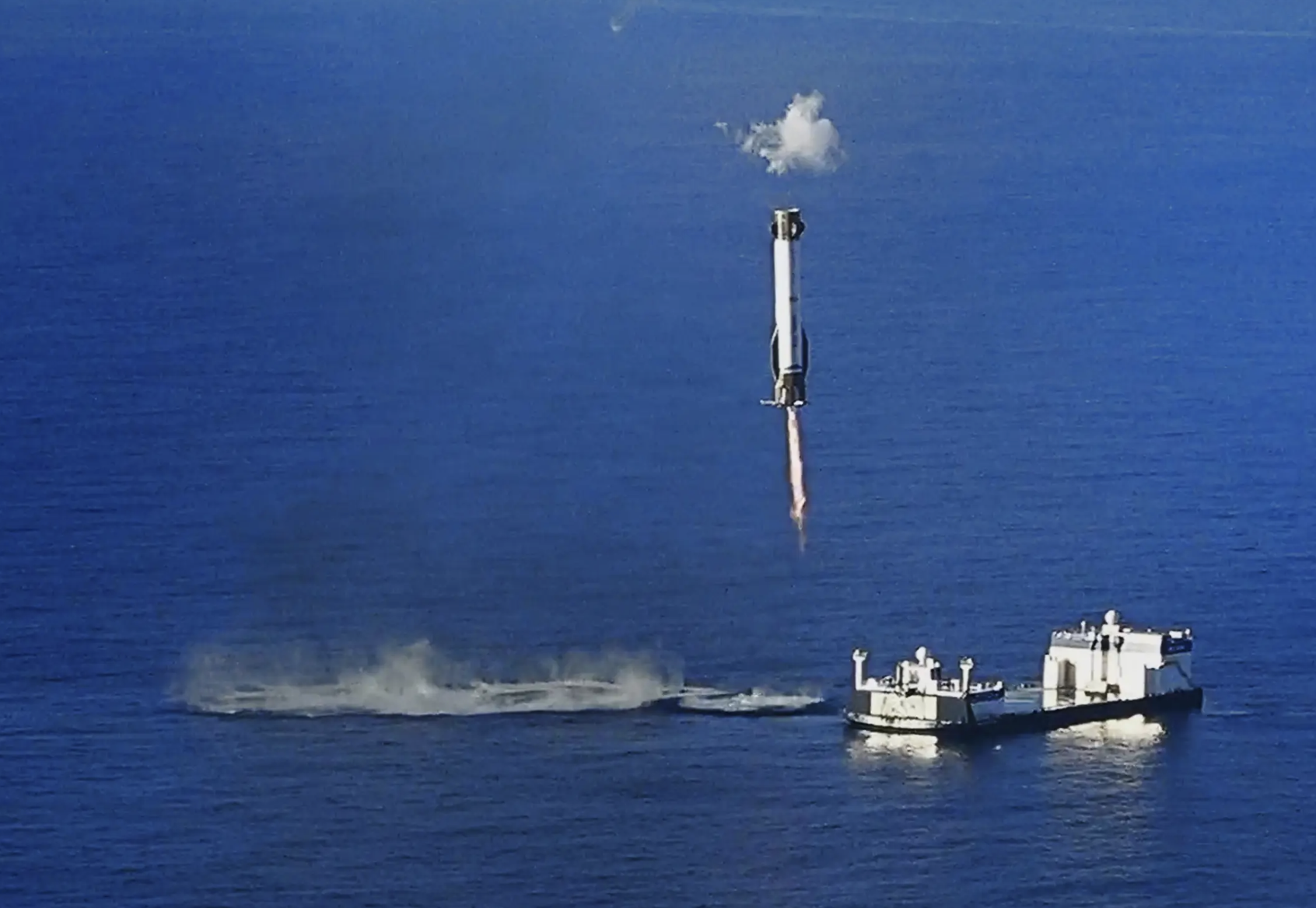
After that flawless flight, Blue Origin felt confident enough to reuse that booster stage for its third New Glenn mission in April, launching AST SpaceMobile's BlueBird 7 satellite.
But unfortunately, while the New Glenn booster stage performed perfectly and nailed the tricky landing, the New Glenn upper stage failed at what should have been the (relatively) easy part of the flight - and the AST SpaceMobile satellite was lost.
Our article covering the April failure:
New Glenn Fails To Deliver – A Setback For AST SpaceMobile and Amazon Leo
That failure is minor in comparison to what happened last week...
New Glenn Returns to the Pad - And Explodes!
Blue Origin claimed to have fixed the issue that kept its last launch from reaching its target orbit, and was gearing up to fly New Glenn again this week - planning to launch 48 Amazon Leo satellites.
But a final engine test on Thursday evening went very very badly, and the New Glenn rocket exploded in an incredibly dramatic fashion:

Even worse than losing the rocket, the damage to the launch pad itself appeared to be catastrophic.
Based on the initial damage assessments, many space industry experts forecast that New Glenn could be grounded for up to 18 months while awaiting pad repairs, completely derailing the New Glenn development program.
Blue Promises to Rebuild - ASAP!
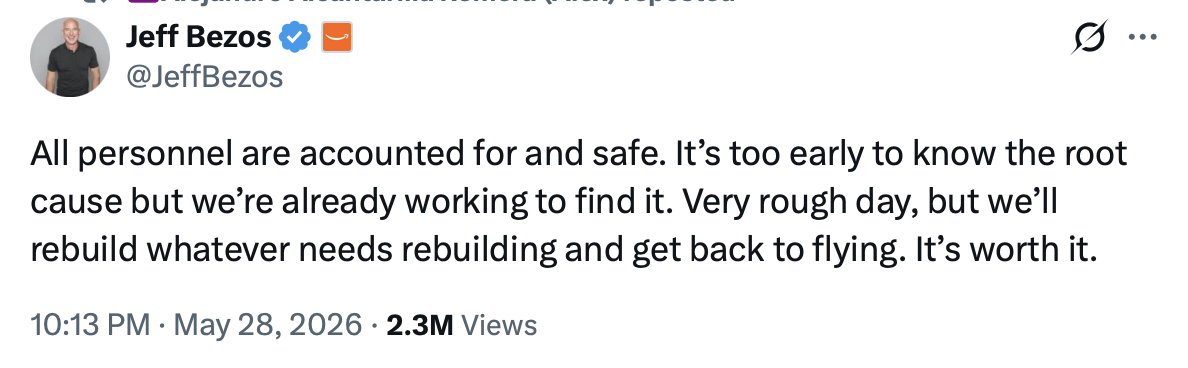
Blue Origin was gearing up to begin monthly New Glenn launches - with stacks of SpaceMobile and Amazon Leo satellites queued up, as well as moon missions for NASA.
These launches are all on hold now - obviously.
Blue Origin has only recently begun preliminary site preparations for building a second New Glenn launch pad, so even if the issue that caused the explosion proves easy to fix - New Glenn has nowhere to launch from until pad repairs can be completed.
And based on the size of the explosion and initial photographs of the damage, most experts predicted it would require an enormous effort and 12-18 months to get New Glenn back on track.
Some even speculated that Blue Origin might just cancel the current 7x2 version of New Glenn entirely - focusing instead on the larger 9x4 version (nine first stage and four second stage engines) that is in the pipeline.

Late last night, Blue Origin CEO David Limp issued a statement that things are not as bad at the pad as they appear:
"Some LC-36 updates. Now that we’ve had access to the pad and integration facility we can share a bit of good news. The propellant farm, oxygen, liquid hydrogen and LNG tanks are all in good shape. This is good luck because these are very long lead items. The water tower is also good. The big support tower is damaged, but it can be repaired in place rather than torn down and replaced.
I’ve seen some speculation that we might move directly to the 9x4 configuration, but we won’t do that. Rate manufacturing of 7x2 is going well, and we’re going to continue that at pace as planned and store the stages for use.
We will fly again before the end of this year. Gradatim Ferociter."
Blue will keep its rocket factory cranking, building up an inventory of rockets ready to launch as soon as the pad is rebuilt.
But even if the pad damage isn't as bad as it appears, aiming to fly again by the end of the year is an incredibly ambitious goal.
And no matter how you slice it - this is a large setback.
One bit of good news - the stack of Amazon Leo satellites set to launch this week had not yet been loaded aboard, and were not damaged in the blast.
Amazon will now need to find these Leos other rides to space, potentially turning to arch-rival SpaceX for even more Falcon flights.
ULA's Vulcan Rocket - Also Grounded
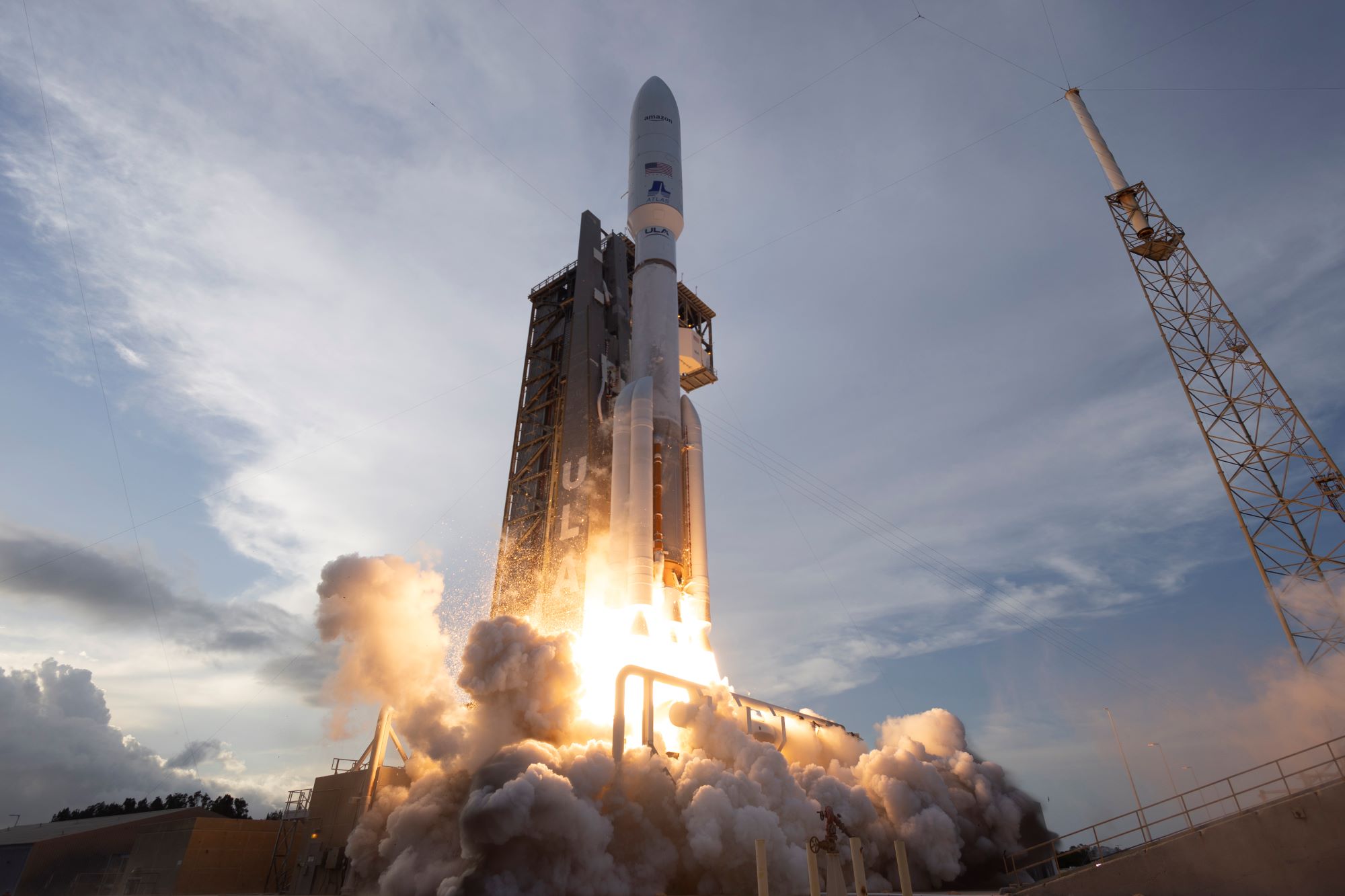
Another new heavy lift rocket design vying for a chance to launch next generation satellite constellations is the Vulcan, built by United Launch Alliance (ULA) - the space launch joint venture owned by Boeing and Lockheed Martin.
The Vulcan has had four successful launches since its debut in 2024, but it is currently "indefinitely grounded" while a recurring issue with its solid rocket boosters is being investigated.
But if the Vulcan wasn't already grounded - it would be now since ULA uses the same BE-4 rocket engines from Blue Origin to power the Vulcan's first stage as are used in New Glenn.
Until ULA and Blue Origin can confirm that it wasn't a flaw in the BE-4 that caused the New Glenn catastrophe, the Vulcan will remain sidelined.
With both Vulcan and New Glenn now out of commission, there aren't a lot of rides left to get satellite constellations into orbit.
Other than buying rides from arch-rival SpaceX, that is.
Amazon Leo & AST SpaceMobile Schedules Impacted
Amazon is legally required to have launched 1,600 Leo satellites by the end of July 2026, or it risks losing its FCC license to operate.
When the Amazon Leo constellation was first announced in 2019 (then known as 'Project Kuiper') - this seemed to be a realistic target.
But things have been slipping ever since - and even though Amazon has spent an enormous sum pre-buying rides to space from nearly every launch provider it can, many of the rockets it has been counting on just haven't been ready.
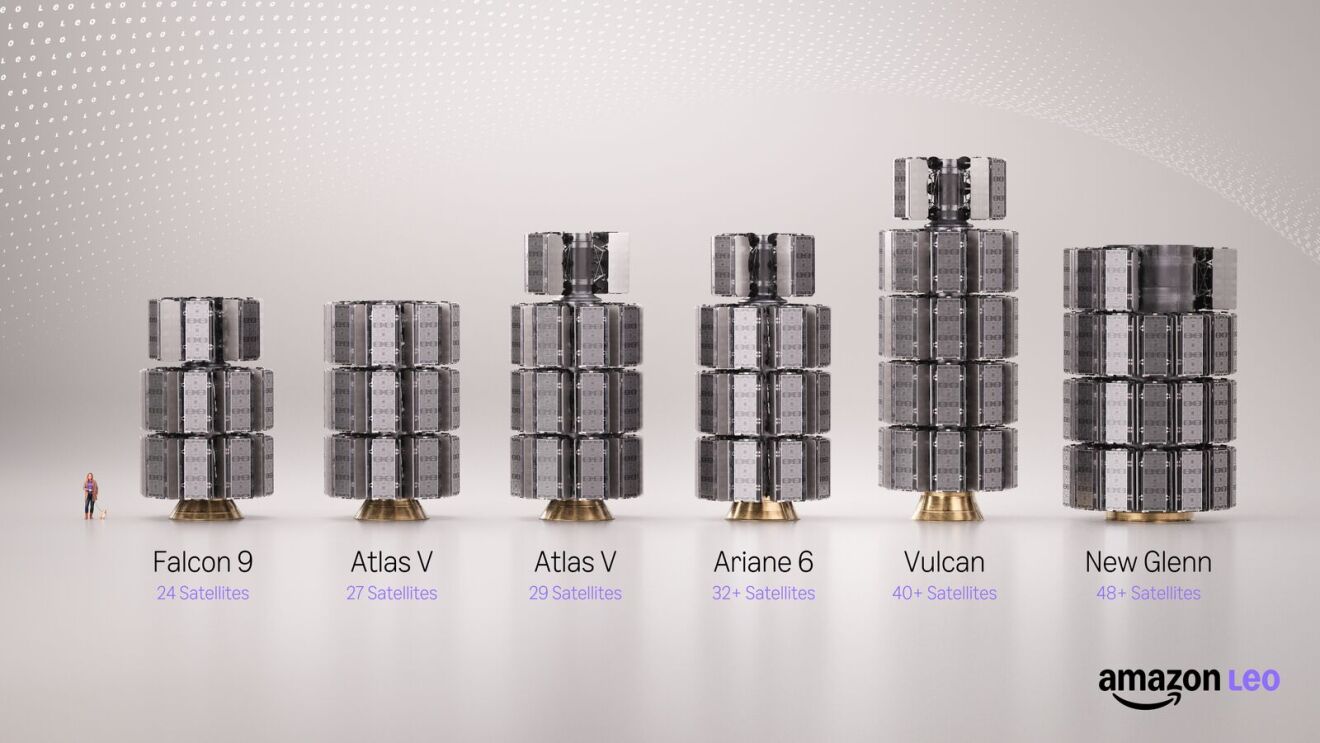
Amazon has the following rockets contracted to carry the Amazon Leo constellation to orbit over the next few years:
- ULA Atlas V - 29 satellites per launch. Seven of eight launches have been completed. Final launch in July, then no more Atlas rockets remain.
- SpaceX Falcon 9 - 24 satellites per launch. Three launches completed, ten more have been recently contracted.
- ULA Vulcan Centaur - 40+ satellites per launch. 38 launches are scheduled and should have begun by now, but Vulcan is currently grounded.
- ESA Ariane 6 - 32+ satellites per launch. Two of sixteen launches complete, next scheduled for Q3. ESA is reliable, but launches at a slow pace.
- Blue Origin New Glenn - 48+ satellites per launch. 27+ launches contracted. Was set to start launching monthly beginning in June. Now likely delayed until sometime in 2027.
At one point, Amazon hoped to have as many as 12 New Glenn Leo launches before the end of 2026.
With New Glenn and Vulcan both out of commission, buying more rides SpaceX is the likely the only hope for Amazon getting enough Leo satellites in orbit this year to begin offering service.
SpaceX's launch schedule, however, is already very booked up - and it remains unclear whether there is even any capacity left to buy more Leo rides, no matter the price.
And no matter what - Amazon is going to miss its big FCC deadline in July.
Amazon has filed for a two-year extension to get to 1,600 Leo satellites - but the FCC has not yet ruled on that request, and time is running out.
UPDATE: Amazon's license extension for the Leo constellation was granted on Friday, June 5th. See our story for details - and the new deadlines Amazon needs to work around:
Amazon Leo Gets FCC Deadline Extension – With a Catch!
SpaceMobile Shows Off Promising Technology - But Also Needs a Ride
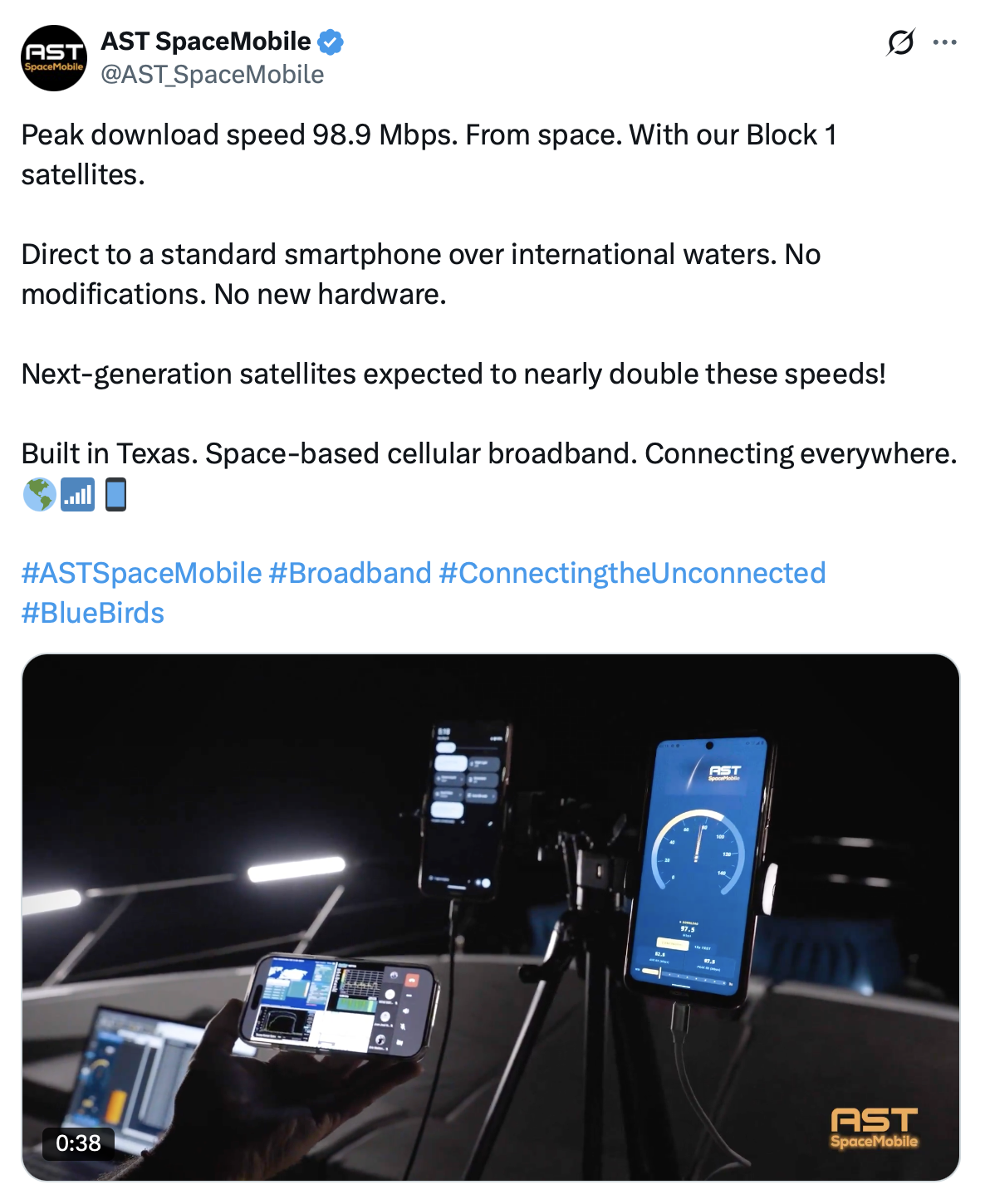
AST SpaceMobile has been showing off just what its massive satellites are capable of. Last month, SpaceMobile showed an everyday cellphone getting nearly 100Mbps downloads from a satellite connection, an incredible tech demo.
But AST SpaceMobile is in the same dire situation as Amazon, having planned on using New Glenn for many of its upcoming launches. The large New Glenn would be able to launch up to eight BlueBird satellites per flight.
But with New Glenn out of action, SpaceMobile is now stuck with a partially built constellation and even fewer financial resources than Amazon has, leaving it with even fewer options to pivot.
At a recent earnings call (before the New Glenn explosion) - SpaceMobile said that it was targeting having 45 satellites in orbit by November 2026 - the minimal amount needed to begin consumer service.
That goal now looks out of reach.
SpaceMobile has its next three satellites queued up for a launch on a Falcon 9 - with a launch expected soon.
But even with a shift to the Falcon - SpaceMobile's pace of getting its constellation built out will likely be slowed down dramatically.
Starship V3 Returns to Flight
SpaceX has continued its relentless pace, launching Starlink V2 satellites on the Falcon 9 - but the future of the Starlink constellation is planned around the much larger and more capable Starlink V3 satellites, which require the massive Starship for a ride to orbit.
The Starlink V3 satellites will each have 10x the downlink and 24x the uplink capacity of the current V2 Mini Starlink satellites.
For more analysis on what Starlink V3 satellites will be capable of and why they are dependent on Starship, see our story from last year.
SpaceX's Starship test flights have been on hold since October while SpaceX worked on the substantially new Starship and Super Heavy Booster V3 designs, featuring a new Raptor 3 engine and a completely redesigned launch pad.
All this new technology debuted with a launch on May 22nd.
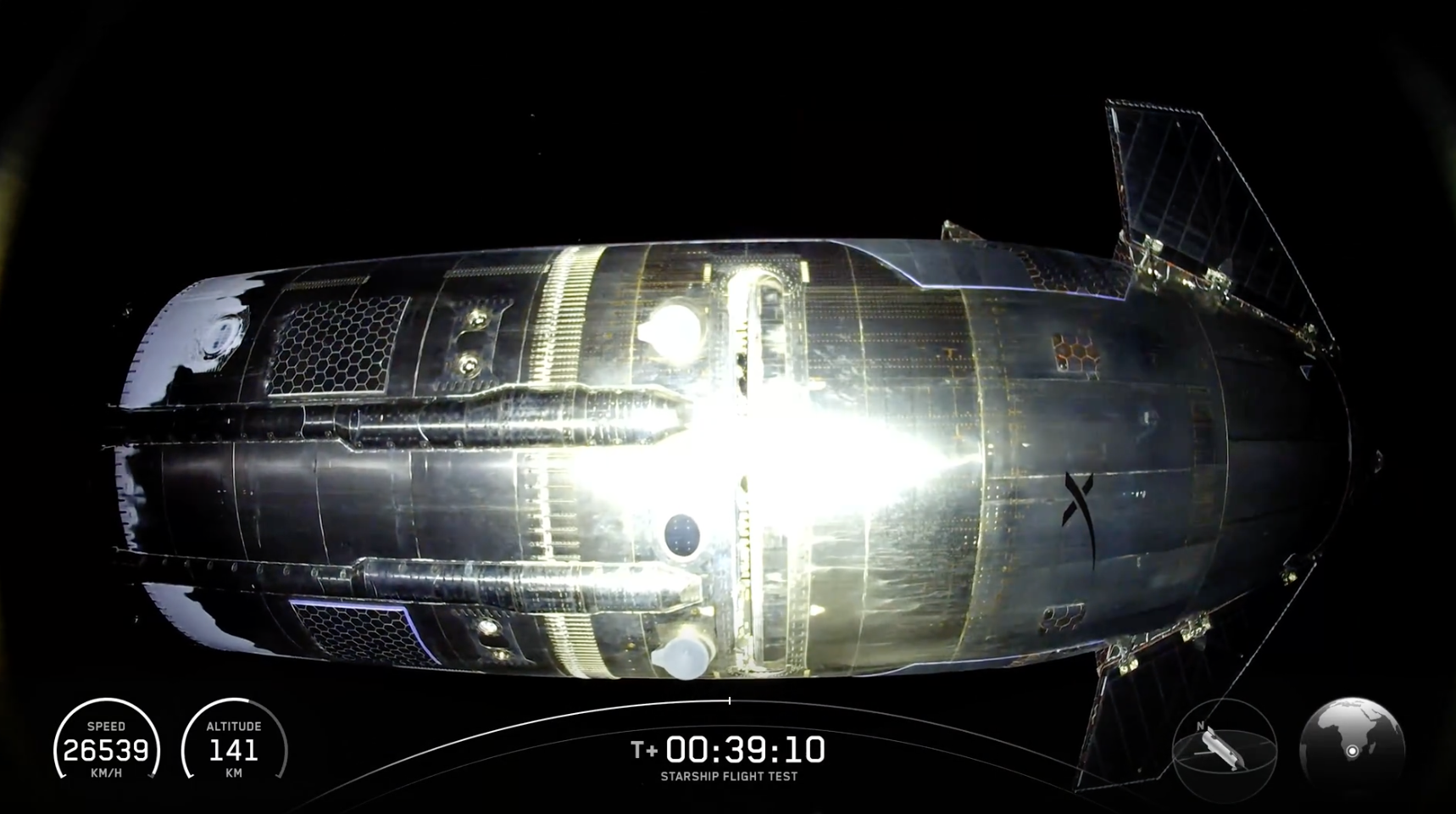
Also debuting was a new and improved "Pez Dispenser" Starlink satellite deployment system, and the test flight was slated to deploy 20 Starlink V3 sized dummy payloads, and two test satellites with some Starlink V3 components.
The test flight was only partially successful.
The Super Heavy booster was intended to do a pinpoint water landing in the Gulf, proving out systems so that SpaceX could feel confident trying to catch and reuse the booster on future flights. But there was a significant failure - and the Super Heavy crashed well off target. Fortunately, it did manage to deliver Starship to a proper trajectory first though.
Starship had an engine failure of its own - but it was able to compensate, and it did reach its target trajectory, and even managed a pinpoint water landing in the Indian Ocean.
And the test Starlink deployments went off seemingly perfectly - a major win.
But with multiple engine failures to work through and an off-target crash in the Gulf, Starship is now officially grounded pending an FAA investigation.
SpaceX needs to address any uncovered issues, and will likely want to substantially repeat this test flight before moving on to tackling reuse and attempting an actual orbital flight and real Starlink V3 satellite deployments.
Concluding Thoughts
Vulcan, New Glenn, and especially Starship are all seeking to push the boundaries of spaceflight.
But space is hard - and this stuff takes time to get right.
While waiting for rockets to mature, Amazon Leo and AST SpaceMobile risk being left with satellites piling up, but no way to get them into orbit.
This New Glenn explosion is undeniably a major setback.
It is now looking like it might take a miracle for either SpaceMobile or Amazon Leo to be ready for consumer service by the end of this year.
The real test now is seeing just how quickly New Glenn can get back on track - and seeing what other pivots Amazon Leo and AST SpaceMobile can manage to keep moving forward.
Meanwhile - SpaceX just keeps pulling further and further ahead, even if there are some stumbles along the way.
The space race continues - excitement guaranteed!
Further Reading
- Mobile Satellite Internet Options -
 Our featured guide on all the current and future satellite internet options of interest to RVers and cruisers.
 - All our our Satellite Internet Resources - Our collection of guides, gear center entries and news coverage on satellite internet.
- Starlink Satellite Internet For Mobile RV And Boat Use - Our featured guide focused on taking advantage of SpaceX's Starlink on the go.
- Previous Industry Update: Late 2025 Satellite Mobile Internet Update: Amazon Leo Getting Ready to Roar? HughesNet Bowing Out? ViaSat Back on Track? SpaceMobile Going Big… And More! - Our latest deep dive into the state of the satellite internet world.
And here is all of our latest satellite internet coverage:








 Mobile Internet Resource Center was founded by Chris & Cherie of