
Key Points:
- Peplink’s new MAX Orbit series is designed to manage and bond multiple satellite internet connections, including Starlink, OneWeb, Iridium, and other Ethernet-based WAN sources.
- The MAX Orbit routers do not include embedded cellular modems, so cellular connectivity requires using another device.
- The Orbit routers are primarily intended for enterprise, maritime, and remote industrial use cases, not for nomads traveling in vans, boats, or RVs.
Peplink has launched the new MAX Orbit series, a family of routers purpose-built to manage and bond multiple satellite internet connections.
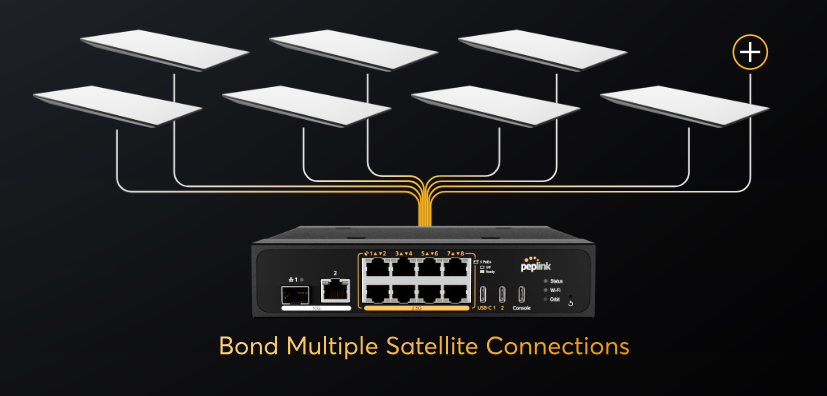
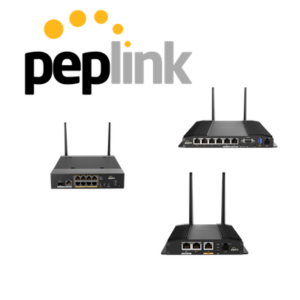 The new lineup includes three models: MAX Orbit 2, MAX Orbit 4, and MAX Orbit 8. As the names imply, these routers are designed around connecting multiple satellite terminals and other WAN sources, allowing Peplink’s SpeedFusion bonding to combine links for better reliability and performance.
However, these come with some downsides for our audience of nomads who live, work, or travel in vans, boats, and RVs.
Read on for the details...
Table of Contents
Video Story
MAX Orbit Series Overview
The MAX Orbit series is intended primarily for enterprise deployments needing redundant satellite and Ethernet-based WAN connections.
Peplink’s marketing emphasizes combining multiple Starlink, OneWeb, Iridium, and other connections into a single managed network, with InControl providing a unified dashboard.
Here is the lineup:
- MAX Orbit 2 ($799) - The smallest model, based on the MAX BR1 Pro platform, comes with one 2.5 Gbps "Orbit" Ethernet port, one Gigabit "Orbit" Ethernet port, one Gigabit LAN port (with PoE-in), Wi-Fi 6, GPS, and 1 Gbps router throughput.
- MAX Orbit 4 ($1,499) - The mid-range model, based on the MAX BR2 Pro platform, comes with four Gigabit “Orbit” ports, two 2.5 Gbps WAN/LAN ports (one with PoE-in), a USB-3 WAN port, Wi-Fi 6, GPS, and 1 Gbps router throughput.
- MAX Orbit 8 ($1,899) - The flagship model comes with eight 2.5 Gbps "Orbit" ports with PoE+ output, one 10 Gbps Ethernet LAN/WAN port, one 10 Gbps SFP+ LAN/WAN port, two USB-C WAN ports, dual-band Wi-Fi 7, GPS, and 4 Gbps router throughput.
The Big Catch: No Embedded Cellular
The main downside of these routers for our audience is that they don't include an integrated cellular modem or the option to add one. Users who want to combine cellular will need an external modem that connects to an Ethernet or USB port, or use Wi-Fi as WAN.
Peplink envisions users of these routers focusing primarily on satellite connections for maritime and extreme remote locations, with the option to add cellular via Ethernet or USB only if needed.
In a sense, Peplink is flipping the usual design where integrated cellular is considered a primary WAN option, while satellite and other WAN connections are secondary and able to be added.
Concluding Thoughts
The MAX Orbit series is an interesting new direction for Peplink, especially as Starlink and other satellite systems (eventually) become increasingly important for enterprise, maritime, and remote connectivity.
Peplink has a formal partnership with Starlink, so these new routers also enable Peplink to leverage that partnership for enterprise customers. Also, Peplink's upcoming firmware release, 8.6.0, which should come out soon (stay tuned for a future story on that), adds support for OneWeb as well as some Starlink improvements that should make bonding and using multiple satellite connections better.
But for most of our audience, these routers will probably not be the best fit since cellular is usually the most important connection option.
Mobile users want redundancy that works for mobile use, and that is typically achieved with a single satellite connection paired with one or more cellular connections. Having multiple satellite dishes on an RV, for example, doesn't provide redundancy when parked under trees.
And, as we noted in our latest satellite industry update, Starlink currently remains the sole broadband satellite option for now, so the benefits of integrating other satellite systems just aren't available to consumers yet.
For more information:
Related Content at the Mobile Internet Resource Center:
- Industry Update: Late 2025 Cellular Industry Update
- Guide: Selecting Your Peplink Router
- Guide: Selecting Mobile Routers
- Learning Center: Peplink for Mobile Internet
Related Updates:








 Mobile Internet Resource Center was founded by Chris & Cherie of