
- Starlink has announced the Mini 2, a portable terminal with a removable 71 Wh quick-swap battery rated for up to 4.5 hours of use.
- The Mini 2 appears to omit the original Mini’s Ethernet LAN port, and its new form factor makes it incompatible with the current Peplink Antenna MAX-S and many accessories designed for the original Mini.
- Invitation-only preorders for select U.S. customers cost $999 plus tax and include the Mini 2 kit and one full year of prepaid Roam Unlimited service, valued by Starlink at $2,100.
- Preorder shipments are estimated to begin in mid-December. The preorder requires a $100 deposit, with the remaining $899 due when the kit ships.
Starlink has officially announced the Starlink Mini 2 dish, which includes a removable quick-swap battery that lets you use the Mini 2 anywhere Starlink offers service without a power cord. This makes it easier than ever to take Starlink on all kinds of adventures.
The Mini 2 still includes a built-in Wi-Fi router, but it seems to omit the original Mini’s Ethernet port, which significantly limits installation flexibility and makes it a poor companion for cellular routers compared to the original Mini.
The new form factor also makes the Mini 2 incompatible with the current Peplink Antenna MAX-S and many accessories designed for the original Mini.
Let's dive into the details about this new Starlink Mini 2 - both the improvements and the regressions.
Table of Contents
Video Story
(Coming Soon)
Starlink Mini 2 Adds a Removable Quick-Swap Battery
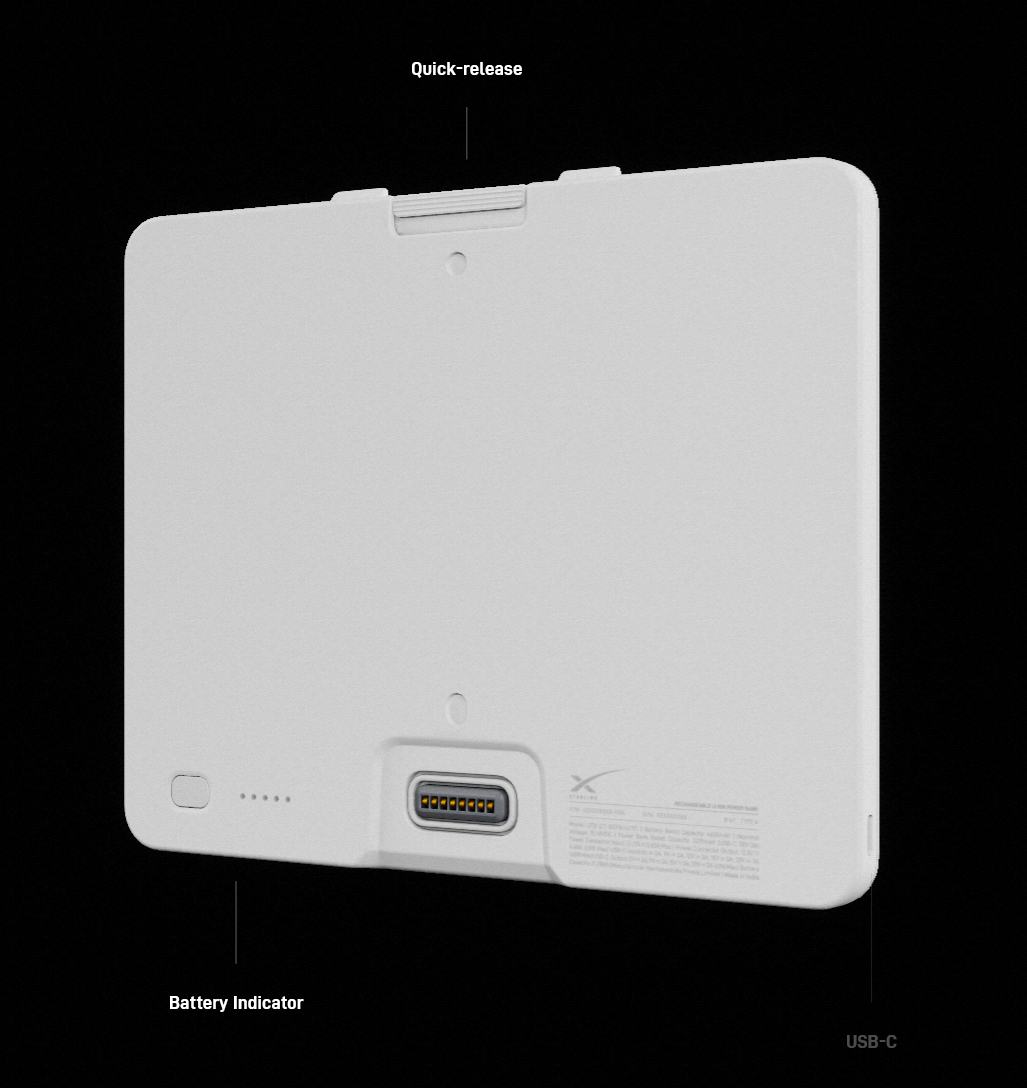
The original Starlink Mini has become extremely popular for its small size, lightweight, and portability, but one thing missing at launch was a battery for power on the go.
The aftermarket community eventually released several add-on battery options to power the original Mini, but none were officially supported by Starlink.
Starlink first teased the Mini 2 in June, when both the V5 Starlink Standard and Starlink Mini 2 were visibly on display during an interview with Elon Musk.
Very little information was provided about the hardware at the time, but rumors suggested the new Mini dish would have a battery. That is now confirmed with the Starlink Mini 2 announcement.
For preorders, the Mini 2 ships with a 71 Wh quick-swap battery rated for up to 4.5 hours of runtime. Starlink will also sell additional batteries separately.
A second battery could provide enough charge for a typical eight-hour workday, assuming both batteries deliver close to their rated maximum.
Starlink is also including a USB-C cable to power the Mini 2 directly.
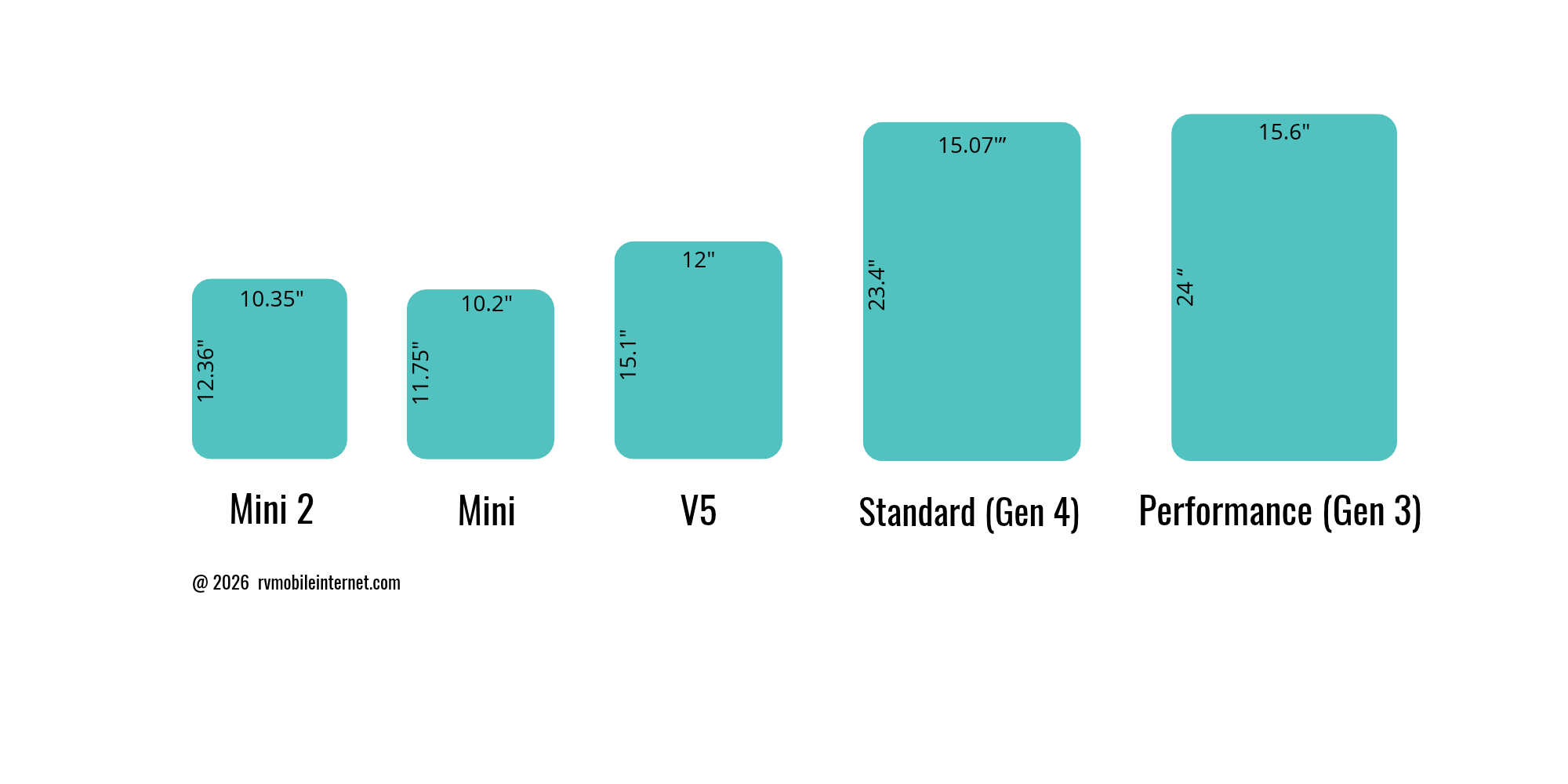
Starlink says the Mini 2 is only 0.91 inches (23.1 mm) thick, compared with 1.45 inches for the original Mini, making it slimmer and easier to carry in a laptop bag alongside your computer.
The Mini 2’s physical dimensions (12.36" x 10.35") are slightly larger than the original Mini’s (11.75" x 10.2"), but it is still quite compact overall.
As you would expect, the Mini 2 is a little heftier at 3.53 lb (1.6 kg) with the battery and kickstand attached, compared with 2.56 lb (1.16 kg) for the original Mini with its kickstand.
Connections & Accessories for the Starlink Mini 2
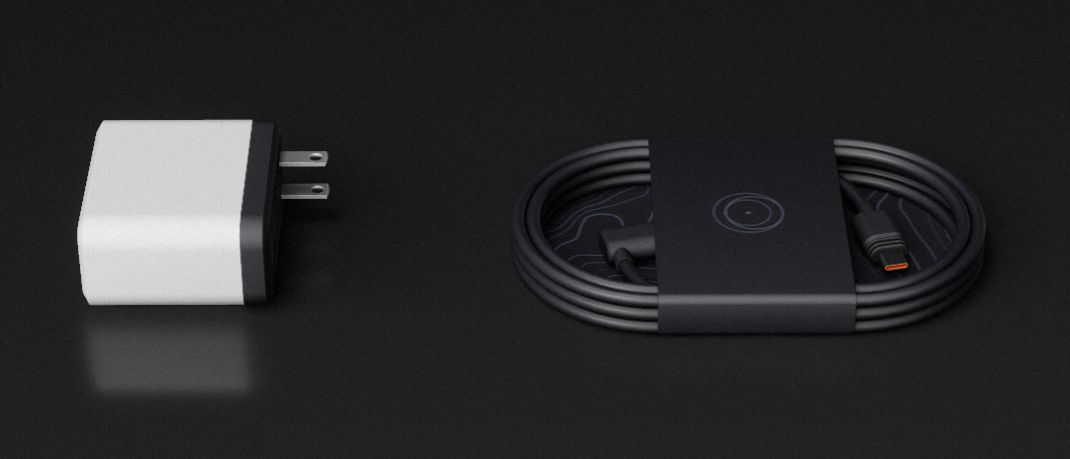
The Mini 2 replaces the original's DC barrel connector with a common USB-C connection for power or charging. The Mini 2 includes a 10ft USB-C to USB-C cable and a 60W USB-C power supply/charger.
Starlink lists the Mini 2 as IP67-rated, but its current product information does not clarify whether the included USB-C cable and power supply are weatherproof, or whether the rating applies while the dish is connected to USB-C power.
That leaves it unclear whether the Mini 2 is suitable for permanent outdoor installation - like the original Mini.
The removable battery also has its own USB-C connection for charging separately from the dish, but the electrical connection between the battery and dish is a multi-pin weatherproof connector built into both.
Both the dish and the battery have their own power buttons, along with what appears to be a power meter letting you know how much power remains in the battery.
On the back of the dish, the Mini 2 features a smaller metal fold-out kickstand. Based on the product images, it may be removable like the original Mini’s kickstand, but Starlink has not confirmed that.
Along with the kickstand, the Mini 2 also includes a standard 1/4-20 threaded camera mount for compatible tripods and other accessories.
The Mini 2’s changed form factor means it will not fit the current Peplink Antenna MAX-S enclosure. The MAX-S also relies on Ethernet between the Starlink Mini and Peplink router. Even if a new enclosure were designed to fit the Mini 2, the lack of Ethernet could make the current integrated setup impractical without another way to connect the two.
Wi-Fi 6 Upgrade, Ethernet Port Removed
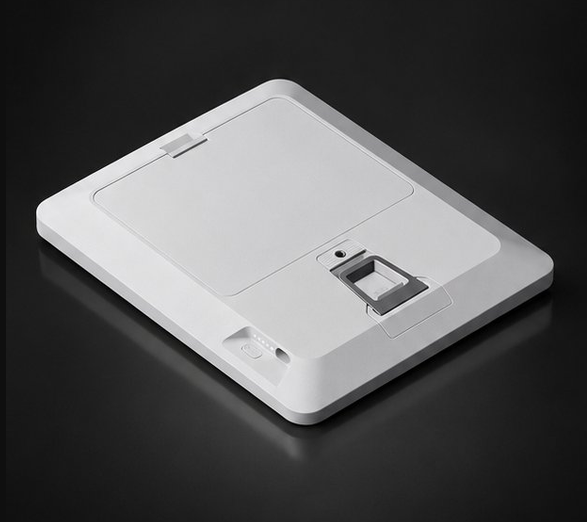 The Starlink Mini 2 upgrades the built-in router from Wi-Fi 5 to Wi-Fi 6.
Starlink rates its Wi-Fi coverage at up to 1,800 square feet on the Mini 2 compared to the original Mini with only up to 1,200 square feet of coverage - a nice upgrade.
But for many mobile installations, the basic limited router integrated into the Starlink Mini may not be enough, particularly if you want to bond the Starlink Mini with a cellular router.
This makes the Mini 2's removal of the integrated Ethernet port that allowed the internal router to be bypassed especially frustrating.
Without an Ethernet port, users can't connect a wired router, including Peplink equipment, directly to the Mini 2.
The Mini 2 still has built-in Wi-Fi 6, but Wi-Fi may not be a practical substitute in RV and boat installations where the dish is mounted outside and the router or connected devices are inside. Walls, metal, and distance can weaken the signal.
Starlink has not listed or shown an Ethernet port or wired Ethernet option for the Mini 2 in its current promotional material, although full specifications have not yet been released. There is a chance that the hardware actually has Ethernet, which would make the Mini 2 much more appealing, but so far it appears that's not the case.
Starlink has not yet shared the Mini 2’s overall performance or antenna array specifications, so we cannot compare it with the original Mini in other ways until hands-on testing is possible. Both dishes are listed with the same 110° field of view, and we suspect they will perform similarly with the current Starlink constellation.
We suspect the Mini 2 may be built with the latest Starlink Gen 3 satellites and upgrades in mind, so it may be more future-proof as the V3 satellite constellation expands.
The Starlink Mini 2 Preorder With 1 Year of Service Included
This is the first time we have seen Starlink launch a new product while also requiring customers to purchase one year of service with it.
Starlink’s initial Mini 2 offering is available by email invitation only to select customers for $999.
This includes one year of prepaid Roam Unlimited service, valued at $2,100.
Starlink notes in the email that if you cancel the service after the 30-day return window, you won't be refunded for the remaining service time. The Mini 2 also cannot be transferred to an existing service line, effectively locking the user into the first year of service.
After the one-year service period has ended, your Mini 2 service will continue at the normal price offered at that time.
It would appear that, with Amazon Leo getting closer to finally launching its beta service, Starlink is doing what it can to lock customers into the Mini 2 and its service for the next year with this initial pre-launch offer.
The standalone cost of the Mini 2 without the one-year service bundle is not known at press time. However, information reportedly leaked from Starlink’s API suggests that the Mini 2 dish could cost $249, and only an additional $50 with the battery, potentially bringing the total to $299. We’ll have to wait and see whether those prices are accurate when the Mini 2 is available to the general public.
Conclusion

The Mini 2 will appeal most to Starlink users and nomads who want a portable, self-contained setup. Its removable battery and built-in Wi-Fi 6 make it easy to pack and use away from an external power source, whether on a family camping trip, a drive through a national park, or another outing.
But the Mini 2 appears to be a significant step backward for users who valued the original Mini’s Ethernet port and accessory compatibility for RV and boat network setups. Without Ethernet, users can’t wire it directly to a more robust router, and the Mini 2's changed form factor makes it incompatible with the ecosystem of third-party accessories designed for the original Mini.
Starlink has not said whether the Mini 2 will replace the original Mini or whether the original model will be discontinued.
Starlink may continue offering both: the Mini 2 adds a battery, while the original Mini keeps its Ethernet port and compatibility with existing accessories.
Overall, the Mini 2 prioritizes grab-and-go portability, while the missing Ethernet connection makes it less useful for integrated RV and boat networks.

Learn More:
Starlink's Referral FAQ.

Use our referral link when purchasing equipment from Starlink.com and activating a consumer Residential or Roam data plan - and get a FREE month of service!
Someone on our team will also get a service credit, which helps us keep our multiple lines of service active for continued testing.
It's a win-win - you save money and help support MIRC!
Starlink Accessories from MobileMustHave
Check out these Starlink accessories sold by our friends at MobileMustHave:

Further Reading
- Starlink Satellite Internet For Mobile RV And Boat Use - Our featured guide focused on taking advantage of SpaceX's Starlink on the go.
- Mobile Satellite Internet Options -
 Our featured guide on all the current and future satellite internet options of interest to RVers and cruisers.
- All our Satellite Internet Resources - Our collection of guides, gear center entries, and news coverage on satellite internet.
- Industry Update: Mobile Satellite Internet for RVers & Boaters - Our deep dive into the current state of the satellite internet world.
And here is all of our recent satellite internet coverage:







 Mobile Internet Resource Center was founded by Chris & Cherie of
