
Key Points:
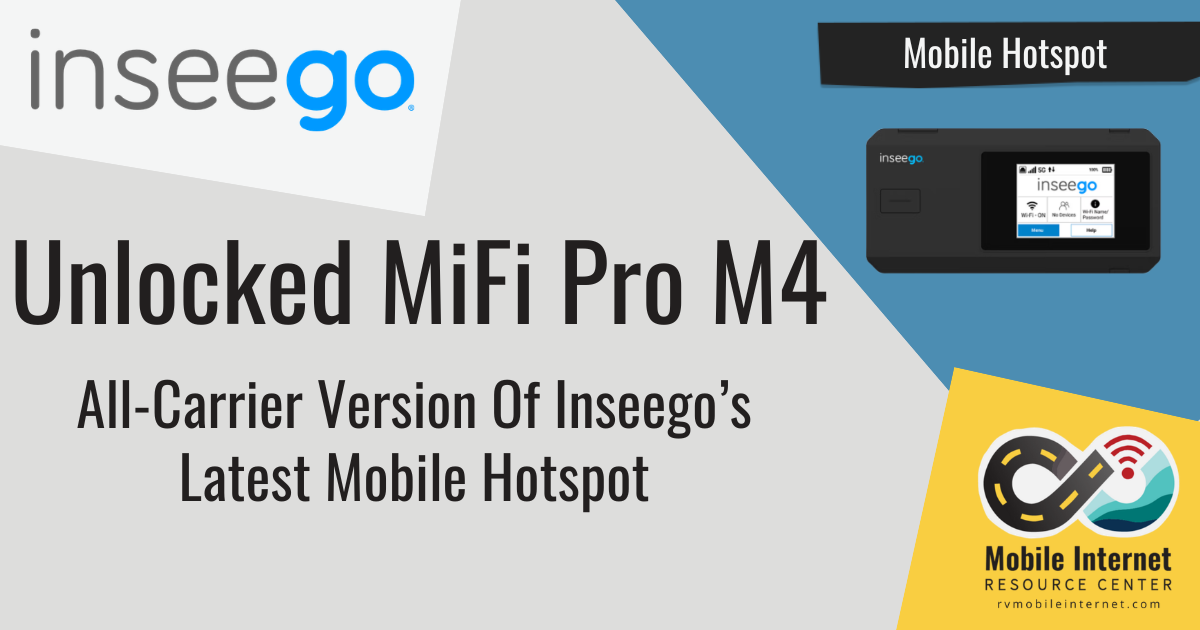
- Inseego has released an unlocked, multi-carrier version of the MiFi PRO M4, marketed as the M4000, for use across North America.
- The M4000 is almost the same as the previously released carrier-specific models, and comes with a Qualcomm X72 modem, dual-band Wi-Fi 7, Gigabit Ethernet, and two TS-9 cellular antenna ports.
- The unlocked model has a $449 MSRP, which makes it the most expensive version, and puts it in direct competition with the Netgear Nighthawk M7 and GL.iNet Mudi 7.
When Inseego first launched the MiFi PRO M4 earlier this year, it was only available in carrier-specific versions for AT&T and T-Mobile. A Verizon version came last month, adding mmWave support.
We are not fans of carrier-specific devices, and we hoped Inseego would eventually release an unlocked model that worked with all three major carriers.
That model has now arrived.
Inseego has announced an unlocked, multi-carrier version of the MiFi PRO M4, now available at some major retailers with an MSRP of $449.
Is this the flexible all-carrier hotspot mobile users have been waiting for? Let's dig into the details.
Table of Contents
Video Version
The Unlocked MiFi PRO M4 M4000
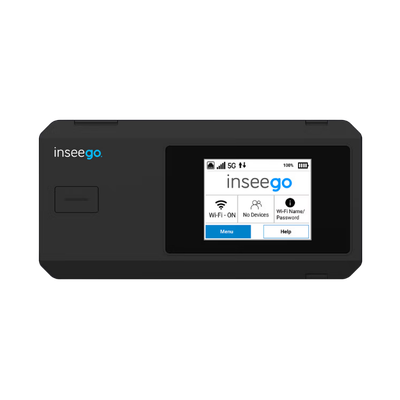 The new unlocked hotspot is marketed as model number M4000, joining the other carrier-specific versions: the AT&T (M4040), T-Mobile (M4020), and Verizon (M4330).
The M4000 supports all three major US carriers as well as bands used in Canada and Mexico, making this a good choice for use throughout North America. Inseego says the device is certified for AT&T, T-Mobile and Verizon, which means customers can activate the M4000 directly with a carrier plan.
Here are the supported bands:
- 5G sub-6 GHz: n2, n5, n7, n12, n14, n25, n26, n28, n29, n30, n38, n41, n48, n66, n70, n71, n77, n78
- 5G mmWave: None
- 4G LTE: 1, 2, 4, 5, 7, 8, 12, 13, 14, 17, 20, 25, 26, 28, 29, 30, 38, 39, 40, 41, 48, 66, 71
It includes the core bands used by all three major US carriers for both LTE and sub-6GHz 5G. It does not support millimeter wave (mmWave) 5G bands (only the Verizon variant does), but this is not a major downside for most RVers, boaters, and nomads.
mmWave has extremely limited range and is primarily deployed in dense urban locations, stadiums, convention centers, and airports.
It also includes many international LTE bands, including 1, 8, 20, 28, 39, and 40, but these are not enough to make it a global device, and Inseego is advertising this for the North American market.
Other Specifications
 The M4000 uses the same Qualcomm Snapdragon X72 modem as the carrier-specific MiFi PRO M4 variants, which is part of the Qualcomm Dragonwing MBB Gen 3 Platform, so all versions share the same design.
Features include:
- Dual-band Wi-Fi 7 on 2.4 GHz and 5 GHz
- One USB-C port for power and tethering
- One built-in Gigabit Ethernet port
- Two TS-9 external cellular antenna ports
- Optional Inseego Connect cloud management
- A battery-preservation mode and the ability to run without a battery
Availability And Pricing
So far, we've only seen the new hotspot available from 5GStore for $449. Inseego doesn't sell it directly, but we expect that it will be available at more vendors in the coming weeks.
The price is in line with similar hotspots from Netgear and Gl.iNet, but is substantially more expensive than the carrier-specific variants. Here are all the variants with prices:
- T-Mobile M4020: $199.99
- AT&T M4040: $209.99
- Verizon M4330 with mmWave: $299.99
- Unlocked M4000: $449
While the unlocked version is a substantial price premium, for our audience of nomads who live, work, and travel in vans, boats, and RVs, it usually makes better sense to have a hotspot that works with all carriers rather than be stuck with a single-carrier device.
Member Exclusives Below:
Bonus Member Only Content Available!
We go extra for our premium members - who make this resource center possible (did you notice the lack of 3rd Party advertising?). We have included some additional information in this news article just for our members - analysis, guidance and/or insider tips.
If you're not yet a member, please consider joining us. Extra content like this is one of the many perks we offer - in-depth content, guidance, discounts, alerts, classroom and more.
If you are already a member, please log in above to see the special content we have prepared for you.
Concluding Thoughts
 The carrier-specific M4 variants are attractively priced and work well on their intended networks, but their limited band support makes them poor choices for users who regularly change carriers or want to use multiple cellular plans in the device.
The unlocked MiFi PRO M4 M4000 is the best version of this hotspot for most of our audience, even at the substantially higher price. It's unfortunate that mobile hotspots remain one of the few cellular devices that still come in carrier-specific versions, but at least there is now an unlocked, all-carrier version to choose instead.
The Netgear M7 offers far better eSIM and international options for $50 more, while the Mudi 7 offers substantially more hardware and networking flexibility in a larger package for around $30 less.
The M4000's primary advantage over the competition is conventional hotspot simplicity, external antenna support, and enterprise-oriented management and security.
For mobile users who want a dependable, all-carrier North American hotspot without the complexity of a full cellular router, the M4000 is worth considering. But users who need eSIM, dual SIM, international flexibility, and advanced multi-WAN features should carefully compare the Netgear M7 and Mudi 7 as alternatives. And we also recommend potential customers assess their needs, as a mobile router may be a better fit than a mobile hotspot.
Further Reading
- Understanding & Selecting Mobile Hotspot Devices (MiFi, Jetpacks, AirCards) - Our featured guide on all the mobile hotspot devices focused on the interests of RVers and cruisers.
- Inseego MiFi PRO M4 (M4000) Mobile Hotspot - Our overview of this new mobile hotspot.
- 2026 Mobile Hotspot Industry Update - Are Mobile Hotspots Relevant Again?
- All Our 5G Cellular Resources
Related News:



 Mobile Internet Resource Center was founded by Chris & Cherie of