
Key Points:
- Insty Connect now offers an indoor window panel antenna as the default option for Insty Connect systems.
- Insty also offers a data plan option for Canada with a Mexico plan coming in the future.
- Most Insty data plans can be managed via an "App Store" in the router interface.
- Insty Connect is now offering a lower-cost "LITE" system that uses an X55 modem.
Insty Connect is a small family-run company that provides a cellular connectivity system focused on the RV market.
The Insty Connect system combines an antenna assembly that also holds the cellular modem, which is connected via Ethernet to a companion indoor router.
By placing the cellular modem directly in the antenna, Insty minimizes the signal loss that occurs when long antenna cables are run to an indoor modem.
As a small company, Insty Connect is able to quickly innovate, and it has consistently iterated on their designs and features, adding options that customers request.
The newest changes include an indoor window-mount panel antenna option, a data plan for Canada (with Mexico promised soon), a data plan "App Store" in the firmware that allows buying and changing data plans, and a lower-cost Insty system that returns to Insty's roots.
Read on for all the details...
Table of Contents
Video Story
New Window Antenna Option
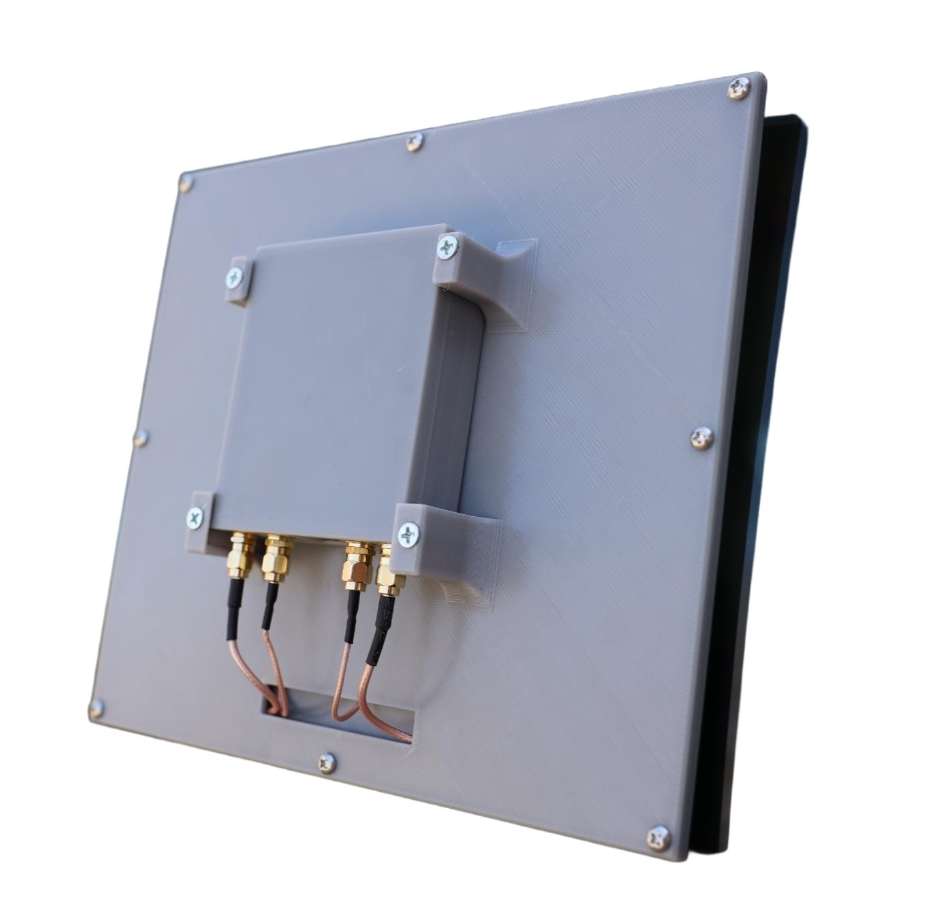
Insty Connect added a new flat-panel antenna called the "Window" as the default option when ordering an Insty Connect system.
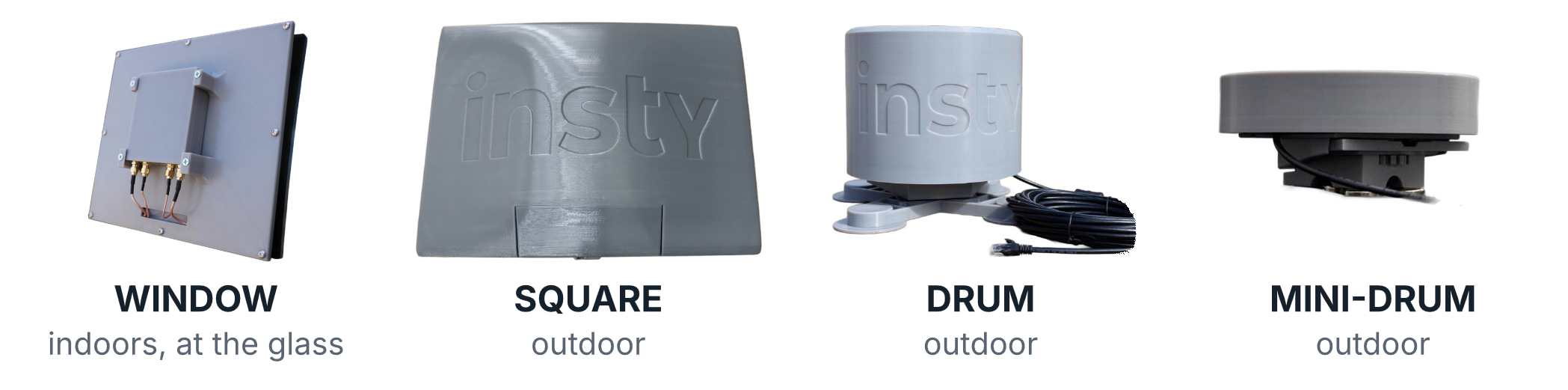
The other exterior omnidirectional antennas are still available for a small upcharge - the Square, Drum, and Mini-Drum antennas.
The new Window antenna is intended to sit inside the RV or vehicle at a window, requiring no drilling or exterior mounting. The cellular modem remains mounted directly to the antenna panel, minimizing signal loss between the antenna and modem.
Insty says the exterior roof-mounted antennas offer better signal characteristics, so the Window option trades some potential performance for a substantially easier and more portable installation. We have not tested these antennas head-to-head, so we can't comment on their relative performance.
Here are Insty's current antennas. Insty says the Drum (which we previously covered here) is their best-performing antenna:
Canada And Mexico Data Plans
Insty Connect has also introduced a 30-day Canada Unlimited plan that roams across all three major Canadian cellular networks.
The first 60 GB is provided at full speed, and then it's throttled to a maximum of 2 Mbps for the remainder of the 30-day period. Insty initially listed the plan at $89, but its current data-plan page no longer displays a price.
A Mexico option is now listed as “coming soon,” but Insty has not announced details or a launch date.
Data Plan “App Store”
Insty Connect has long offered its own data plan lineup, but it's now easier to switch plans without needing a new SIM card or contacting them directly.
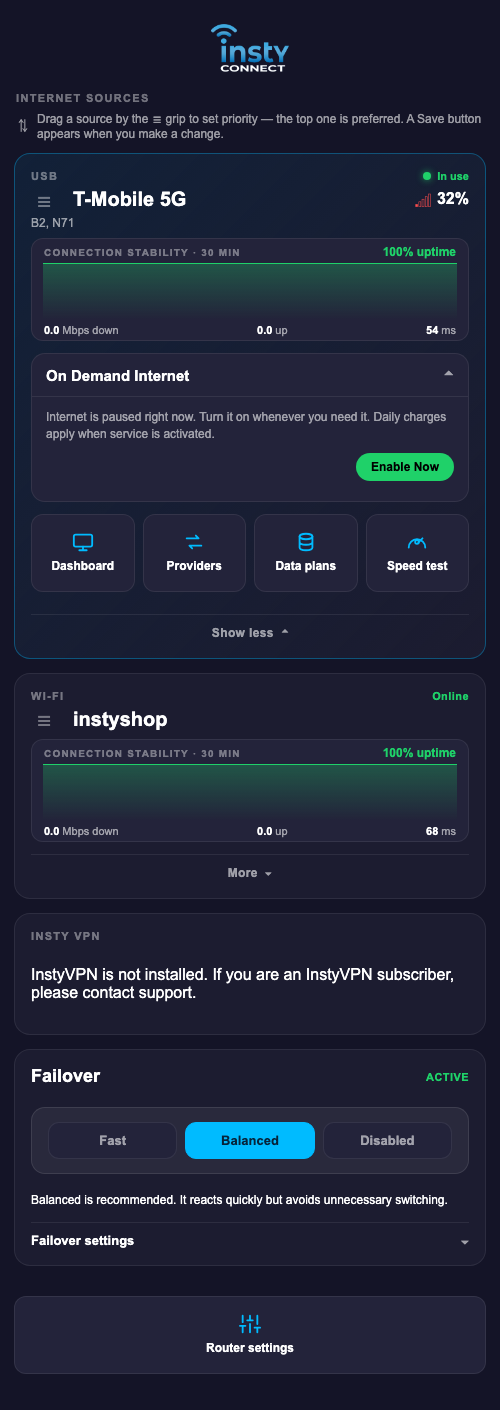
Built into the router firmware is what Insty calls an "App Store," which allows customers to select and activate Insty data plans without contacting support or manually configuring a SIM.
Despite the name, this is not a downloadable Apple or Android app; it's part of the router's firmware interface.
The updated interface includes separate Dashboard, Providers, Data Plans, and Speed Test sections, and Insty says customers can change plans from the Data Plans section and switch between T-Mobile and Verizon on eligible multi-network plans. The Hot-Standby service can also be activated from the interface using a texted verification code or configured to turn on automatically when the router detects internet demand.
The system needs internet access or a location with a cellular signal, and customers must have a provisioned Insty SIM card, which ties the system to Insty's backend data plan system.
Some account functions can't be done via the firmware, however, including pausing or resuming monthly service, which still needs to be handled through Insty’s online billing portal. The same applies to the Canada plan - customers will need to contact Insty support to get that plan.
But this is still convenient, assuming Insty's data plans work for your needs. Here's a quick overview of Insty's plan lineup:
- Single Network Unlimited (T-Mobile) - $79/month
- Multi-Network Unlimited (T-Mobile + Verizon) - $139/month
- Hot Standby (T-Mobile) - $10/month + $4/day for unlimited service on a day-to-day basis
- Tiered Data (T-Mobile) - Options ranging from 2 GB for $19 to 50 GB for $69
- Several specialty plans, including a 3-network plan, a plan for those with two Insty modems, and others
Customers can also "pause" service for $5/month. This keeps the Insty SIM active in the system and allows customers to restart service without provisioning a new SIM card.
Insty “LITE” System
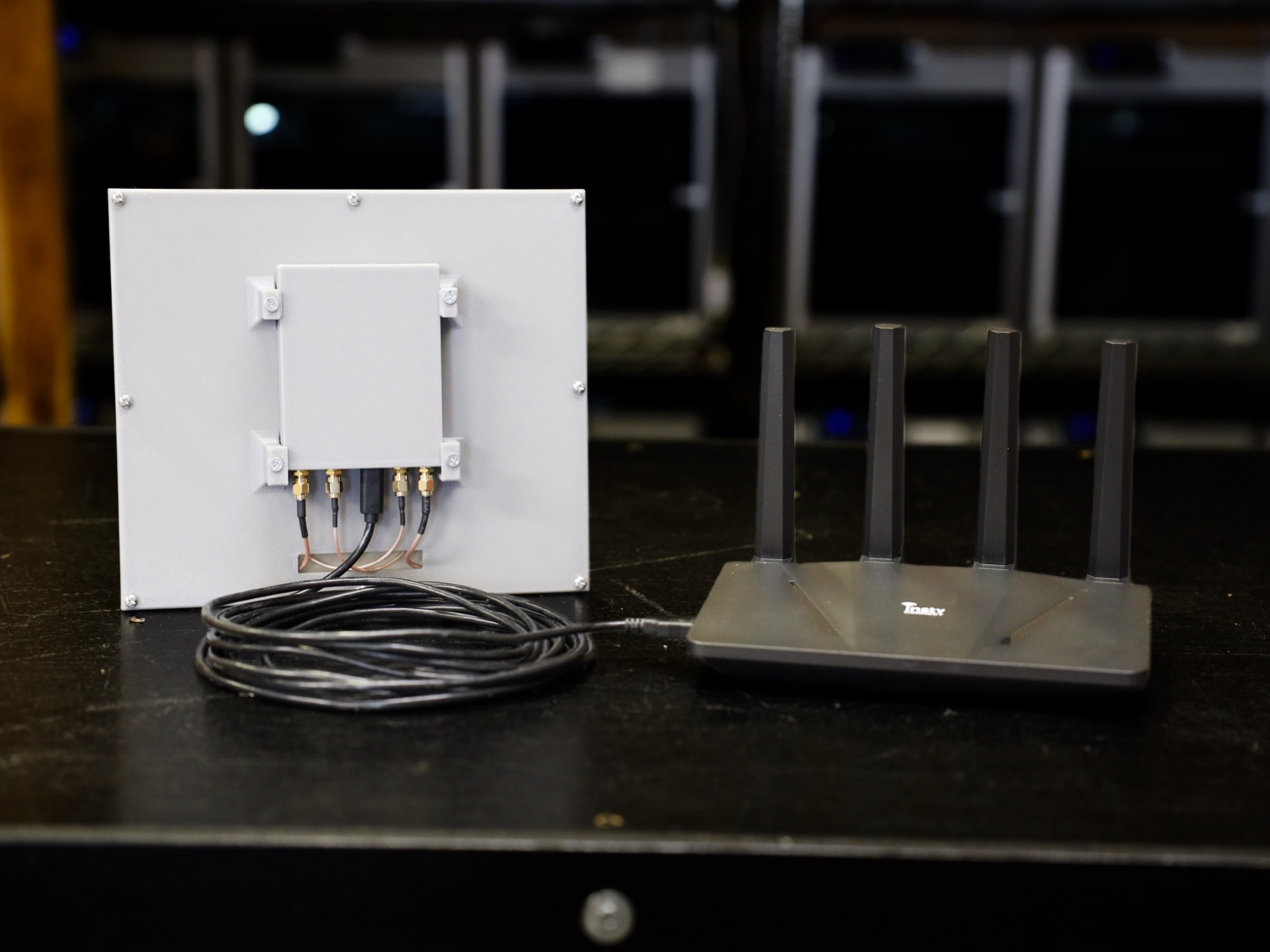
The new Insty Connect LITE is a lower-cost alternative to the flagship Explorer system that's long been the only model sold.
The new LITE system, with shipping starting today, July 27th, 2026, is a regression in several respects, but it is also cheaper at $399 (currently selling for $349 on the website) compared to the Explorer at $799 (currently $599 on the website).
The LITE is aimed primarily at basic installations and cellular backup for those using Starlink as a primary connection.
Both systems use the same antennas (except the directional antennas are not compatible with LITE) and the same basic design, with the modem integrated into the antenna. LITE also supports the same Insty data plans and has the same router interface.
But LITE uses a Qualcomm X55 5G modem connected to the router by a USB cable, while Explorer uses a newer X62 modem with an Ethernet/PoE connection.
The original Insty Explorer system also used USB to connect the modem/antenna to the router, but moved to PoE a few years ago. PoE provides faster data rates and allows for longer cable runs than USB.
The big downside of this option is the X55 modem, which has several limitations when it comes to 5G and is not a future-proof design.
Originally launched in 2019, the X55 is quite dated by today's standards, and our recommendation for a while now has been to skip it in favor of newer modems. It lacks many of the carrier aggregation and network optimization improvements used by modern and future 5G networks, and is missing support for a significant portion of AT&T's new C-Band (n77) spectrum.
But at $349 for the whole system (router, antenna, and modem), it is in the same ballpark as mobile hotspot devices or the Spitz AX - a more traditional cellular-embedded router with an X62 modem, but without the external antenna and several features the Insty system provides.
Concluding Thoughts
 The Insty Connect Explorer remains one of our Top Picks for RVers who want an integrated cellular connectivity system that performs well, comes with a variety of antenna and data plan options, and offers rare features. It's also made by an RVer for RVers, and Insty has a track record of providing good support and adjusting its products to RVers' needs.
The external modem design, flexible antenna options, failover, data plans, Starlink compatibility, and optional Speedify bonding give it a set of capabilities that are difficult to duplicate in a similar one-stop-shop package, especially at the current $599 price.
The new Window panel antenna is a great new option for an indoor antenna, as it doesn't require installation or drilling holes like the roof-mounted antennas. The data plans cover all the typical RV use cases, and offering coverage in Canada (and eventually Mexico) is rare among third-party data plan providers. The "App Store" is also convenient for managing most of Insty's data plans.
The new LITE system is cheaper but is not one we can recommend for most users, given the limitations of the X55 modem, which will only become more dated in the future. It may still appeal to budget-conscious users who primarily want cellular backup for Starlink, but we do not consider it a Top Pick and recommend spending extra to get the Explorer instead.
For more information:
Related MIRC Content
- Guide: Selecting Mobile Routers
- Gear Center: Insty Connect
Related News Stories:








 Mobile Internet Resource Center was founded by Chris & Cherie of