
Starlink has made two changes to how its one-time demand surcharges work, and both could catch some Residential users off guard.
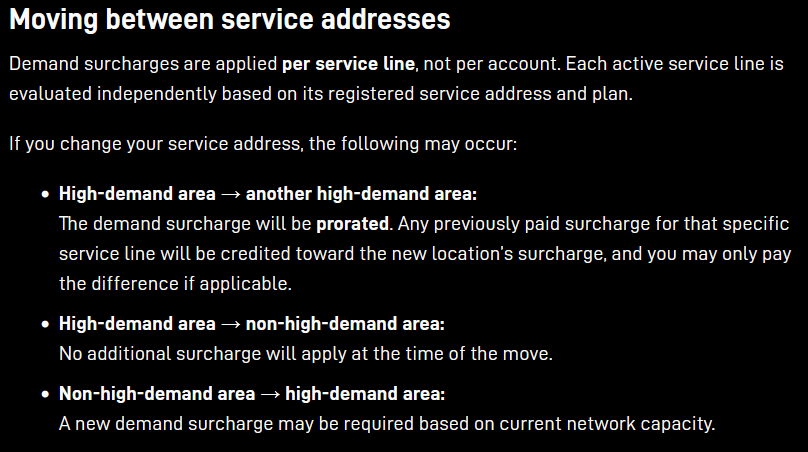 The biggest impact for our audience of nomads is likely for those who use Residential service seasonally with Standby Mode, or frequently change a Residential service address while traveling. Starlink’s current help documentation says demand surcharges can apply not only to new service activations in high-demand areas, but also when moving between service addresses or switching to Residential service after using Standby Mode.
When Standby Mode was introduced last year, we noted that customers in demand-surcharge areas would not have to pay the surcharge again when returning to regular Residential service from Standby Mode.
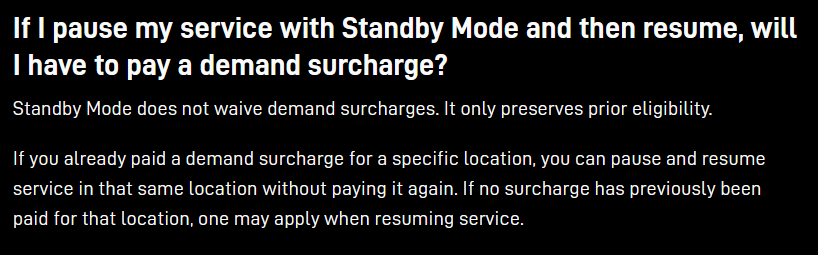 That has now changed, and Starlink’s current standby FAQ now states that Standby Mode no longer waives a demand surcharge - instead, it only preserves prior eligibility. In practical terms, that means if a surcharge was never paid for that specific location, one may now apply when service is resumed.
However, if a customer already paid a demand surcharge for a specific address, resuming service there should not require paying that same surcharge again. But for customers who entered Standby before a surcharge was introduced, or who never paid one in the first place, resuming Residential service may now come with a surcharge of up to $1,500 in some markets.
Additionally, Starlink’s demand surcharge FAQ now explicitly states that the fee can apply when moving between service addresses and indicates that moves between high-demand areas may result in a prorated surcharge. That means users who rely on changing their Residential service address as they travel should no longer assume a move will go through without an added one-time fee.
For travelers, RVers, and others who make frequent address changes with Starlink Residential, it's now especially important to read the confirmation screen before approving any service-address update or resuming Residential service from Standby. In a high-demand area, that click may now carry a significant extra charge.
Key Mobile Internet Related Considerations:
- Starlink no longer treats Standby Mode as a way to avoid a future demand surcharge when returning to Residential service in a high-demand area.
- Moving a Residential service address into, or between, high-demand areas can also trigger a demand surcharge.
- Users who frequently change service addresses should carefully review the final confirmation screen before clicking through.
Video Story:

Learn More:
Starlink's Referral FAQ.

Use our referral link when purchasing equipment from Starlink.com and activating a consumer Residential or Roam Unlimited data plan - and get a FREE month of service!
And so will someone on our team, which helps us keep our multiple lines of service active for continued testing.
It's a win-win - you save money and help support MIRC!
Related Content at the Mobile Internet Resource Center:
- Guide: Starlink Satellite Internet For Mobile RV And Boat Use
- Starlink Resources: Starlink Resource Collection
- Content Collection: Mobile Satellite Internet Resources
- Gear: SpaceX Starlink
Related Updates:







 Mobile Internet Resource Center (dba Two Steps Beyond LLC) is founded by Chris & Cherie of