
Key Points:
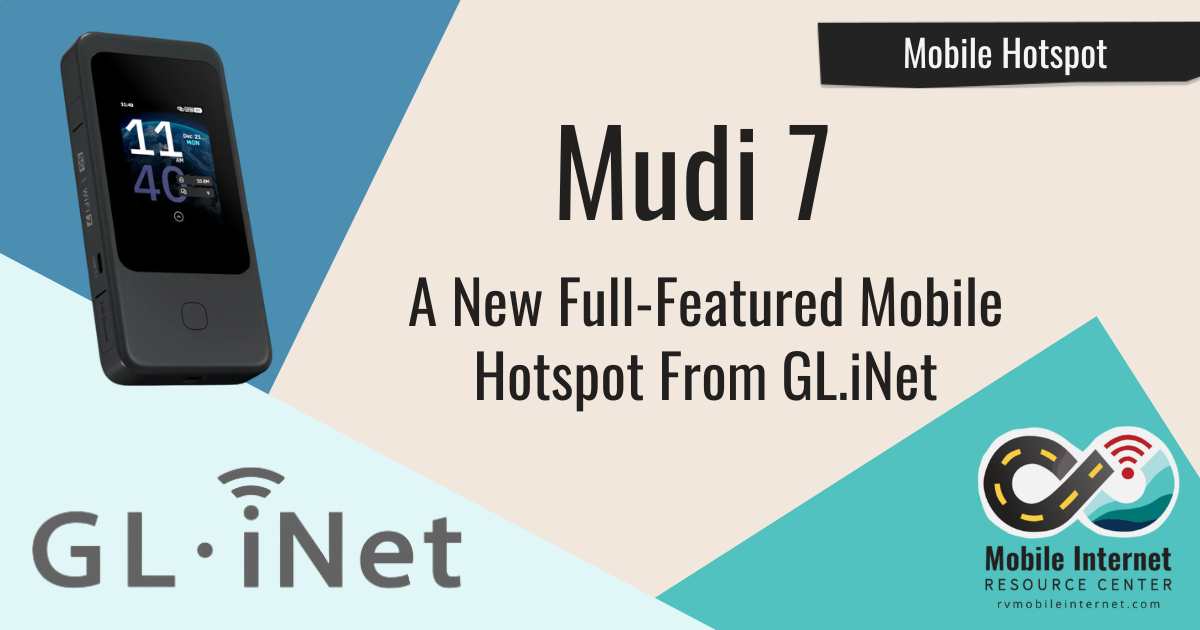
- The Mudi 7 is a new mobile hotspot with an X72 modem and a full set of features and capabilities, including some new and unusual ones
- The Mudi 7 supports up to five WAN connections, three LAN connections, and has two cellular antenna ports
- The hotspot also features a removable battery and can be operated on USB power with the battery removed
Table of Contents
Video Story
GL.iNet is a Hong Kong-based tech company that manufactures a range of routers, mobile hotspots, and other networking devices.
 GL.iNet offers a broad product line, and the new Mudi 7 is its latest and most advanced mobile hotspot to date, with features that appeal to mobile users who live, work, or travel in vans, boats, and RVs. It has an X72 Qualcomm modem and supports tri-band Wi-Fi 7. It also has cellular antenna ports, an Ethernet port, separate USB-C ports for power and data, and support for 2 physical SIMs plus an eSIM.
The Mudi 7 is in presale status and is expected to be generally available in April 2026 for an MSRP of $399. GL.iNet is currently offering a preorder discounted price of $319, with expected shipment in mid-April.
Is this new hotspot worth considering? Let's dig into the details...
Mudi 7 Specifications
The first thing to note about the Mudi 7 is that it's not a small or light mobile hotspot, measuring over six inches long, three inches wide, and almost an inch thick. It weighs about 2/3 of a pound.
The reason is that this device packs in many features and ports, as well as a 5,380 mAh removable battery.
Cellular Modem Specifications
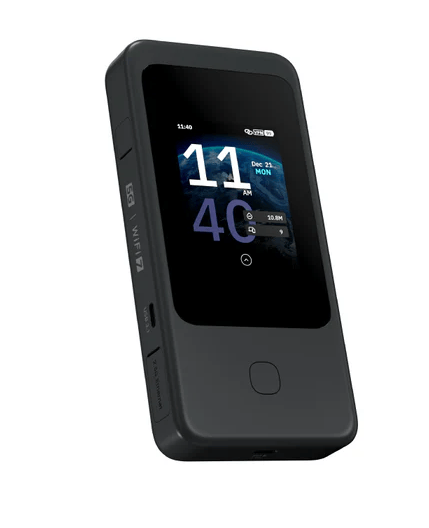
The Mudi 7 uses a Qualcomm X72 modem with a peak theoretical throughput of up to 4.67 Gbps. GL.iNet sells two versions, one for the EU and one for North America. There isn't a version that supports global bands.
Here are the bands the North American version supports:
- 5G Sub-6GHz: n2, n5, n7, n12 , n14, n25, n26, n30, n38, n41, n48, n66, n71, n77, n78
- 5G mmWave: None
- LTE Bands: 2, 4, 5, 7, 12, 13, 14, 17, 25, 26, 29, 30, 38, 41, 42, 43, 48, 66, 71
This provides good coverage for all North American carriers for both 5G and LTE. The major missing bands are those for international use, and this would be a poor choice for international travelers.
Like most hotspots, millimeter-wave (mmWave) 5G isn't supported, but this isn't a major downside, since adding the capability is expensive and mmWave is generally not deployed in the areas where RVers and boaters go.
SIM Diversity
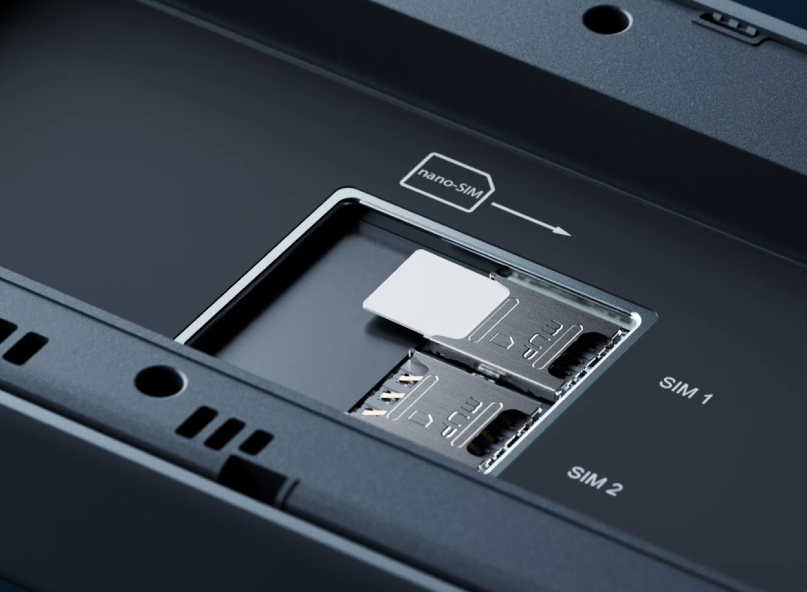
Like several other new hotspots entering the market, the Mudi 7 offers multiple SIM options.
Beneath the battery are two nano sim slots, and the device also supports eSIM. According to the user manual, the Mudi 7 does support SIM auto-switching (failover).
Multiple SIM support is a nice-to-have feature in any cellular device and has long been rare in mobile hotspots. This allows you to have more than one plan active on the hotspot at once, though with only a single modem, you cannot connect to multiple plans simultaneously.
 GL.iNet also offers eSIM plans through a third-party provider, with a variety of options available that cap out at 2 GB and are quite expensive. However, the device does support loading other eSIM profiles from different providers.
Multi-WAN Features
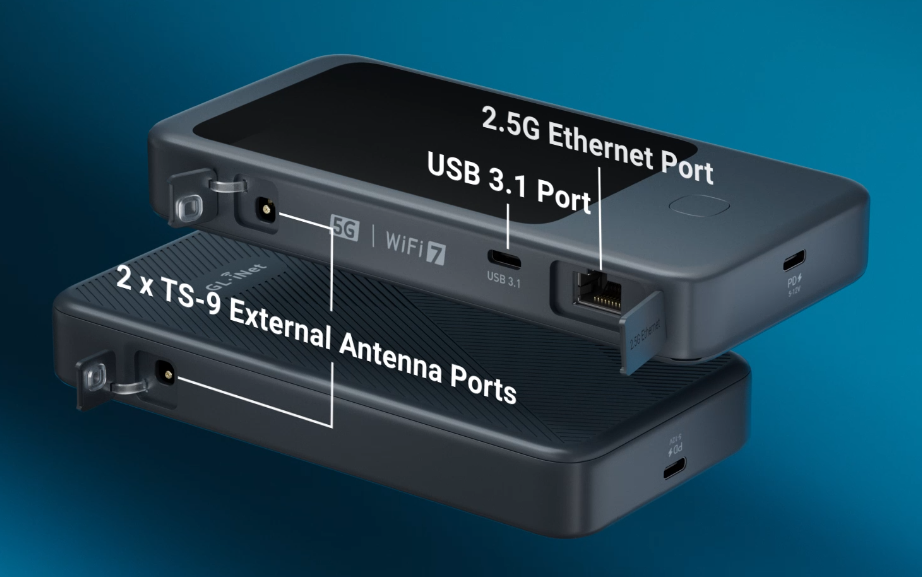
One of the most interesting features of the Mudi 7 is the flexibility of its available WAN options, which rival those of a full-featured router. The device can have up to 5 WAN connections:
- Cellular - Normal for any mobile hotspot or cellular device
- Ethernet - The 2.5 Gigabit Ethernet port isn't just a LAN port, but can also be a WAN port
- Wi-Fi-as-WAN - The Mudi 7 can connect to a Wi-Fi access point and share that connection with other devices
- USB-C - Normally in mobile hotspots, the USB port is limited to data transfer to other devices. With the Mudi, it can also act like a USB port on a router, and get a connection from another device, such as a smartphone or a different mobile hotspot
- USB-to-Ethernet - The USB-C data port also supports USB-C-to-Ethernet adapters, which can provide another Ethernet WAN option
That is an impressive level of WAN flexibility in a mobile hotspot.
What's not clear at press time, since this device isn't officially released yet, is how well it can coordinate among those WAN options and what multi-WAN features it might have beyond basic failover.
LAN Connection Options
For LAN connections, the Mudi 7 has the three primary options:
- Ethernet - Via the 2.5 Gigabit Ethernet port
- USB- Via the USB-C data port
- Wi-Fi - Supports Wi-Fi 7, including the 6 GHz band
No surprises here, the Mudi provides the full range of LAN connection options we expect to see in a premium mobile hotspot.
Other Features
The Mudi 7 comes with several other features, some of which are unusual for this type of device:
- Cellular Antenna Ports - Includes 2x TS-9 ports for 2x2 MIMO external antennas
- Removable Battery & Powerable Without A Battery - The rear cover can be easily removed, along with the battery. Additionally, the Mudi 7 can be operated without the battery on USB power only
- Dual USB-C Ports - One port for data and a second dedicated port for 24W PD power. This provides additional flexibility to USB-tether to, for example, a laptop and charge/power the device from a standard USB charger with a higher output than a laptop would provide. This also comes in handy when operating the device without a battery on dedicated USB power
- Cloud Management - An optional feature via GL.iNet's "GoodCloud" service
- VPN Support - Supports both OpenVPN and WireGuard
- OpenWRT Firmware - While we haven't seen the firmware in action, GL.iNet says it uses a version of GL.iNet's custom OpenWRT firmware. This is usually seen on router hardware, not mobile hotspots
This is a lot of nice features to have in a mobile hotspot.
Concluding Thoughts
The Mudi 7 is an impressive mobile hotspot on paper, offering more features and flexibility than any we've seen before. It definitely is part of a trend that blurs the line between a mobile hotspot and a full-fledged router.
The price is also very attractive, with a $399 MSRP or $319 during the current preorder period.
The main downside is the lack of global band support, which limits use to North America. That's unfortunate, as this would otherwise be a great option for international travelers.
Further Reading
- Understanding & Selecting Mobile Hotspot Devices (MiFi, Jetpacks, AirCards) - Our featured guide evaluating the various ways to get online while mobile, including using mobile hotspots.
- Overview: Mudi 7 by GL.iNet
- All Our Cellular Resources
Related News:







 Mobile Internet Resource Center (dba Two Steps Beyond LLC) is founded by Chris & Cherie of